Tile brings character to a kitchen, but grout, uneven joints, damage and a busy pattern can complicate daily use.
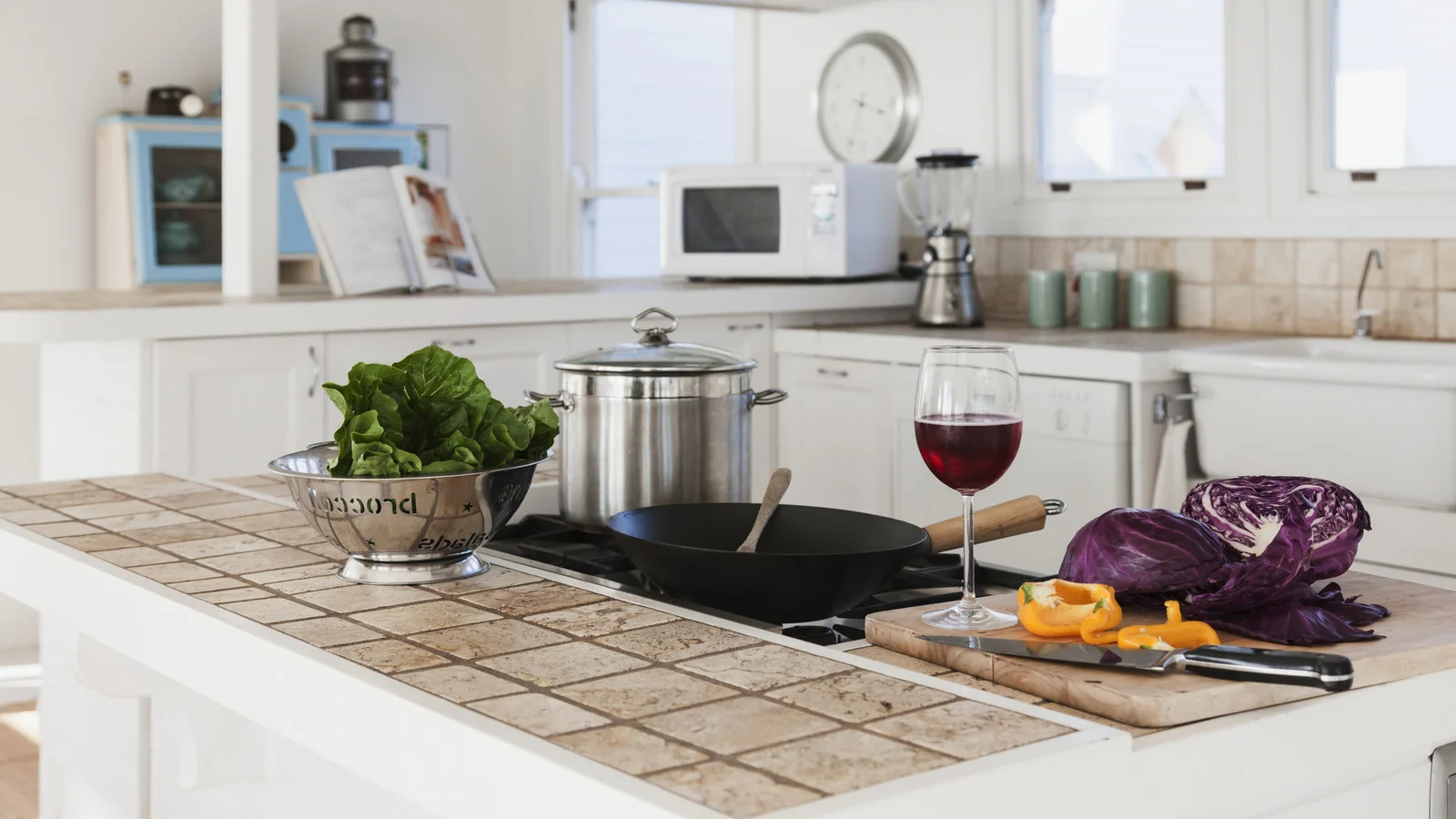
Tile countertops can give a kitchen a distinctive, retro feel. The trade-off is that their joints and individual pieces affect everyday work in ways a continuous surface doesn’t. For homeowners weighing the look against the upkeep, Kerrie Kelly, CEO and creative director of Kerrie Kelly Studio, says tile is often better used on a backsplash than as the main work surface.
“I love tile,” Kelly said, “just usually not as the primary kitchen work surface.” Used vertically, she explained, tile’s pattern and texture can add character without having to stand up to food preparation and frequent cleaning. Here are four practical drawbacks to consider before choosing tile for a countertop.
Grout adds cleaning and upkeep
Grout is the part of a tiled counter that tends to demand the most attention. Food crumbs, cooking oils and spills can settle into its lines, and discoloration can make those joints stand out. Kelly describes grout as extra maintenance on a surface that gets heavy use and should be easy to wipe clean.
For an existing tiled countertop, her advice is to clean and reseal the grout regularly and repair damage as soon as it appears. Hydrogen peroxide can help with kitchen cleaning, including grout. If choosing a new surface, Kelly favors large-format, low-porosity options. She cited Silestone and, depending on the application, Dekton as alternatives that can provide visual impact with the performance expected in a modern kitchen.
Joints interrupt everyday tasks
A countertop is a work area, and its surface matters when rolling dough, baking or wiping up. Tile joints create small breaks that can make those tasks less convenient. They can also get in the way when setting down small objects. A slab surface avoids those interruptions, Kelly said.
Replacing a tiled counter may not be practical for everyone. Cutting boards and trivets can provide smoother work areas, while a standalone kitchen island can take on the main prep tasks if the room allows. Another option is to keep tile in a smaller area, such as around the sink, and use a continuous surface elsewhere.
Individual tiles can chip or crack
Pots and pans can strike a countertop during everyday cooking, and a hard impact may chip or crack a tile. Damage is especially noticeable on exposed edges. A badly cracked tile can also become a safety concern if pieces begin to flake off.
Kelly recommends keeping matching spare tiles when possible. Finding a replacement can be difficult if the original style has been discontinued. Small cracks might be patched temporarily with epoxy, but a larger break usually means replacing the tile. The source estimates that repair at around $400 on average as of 2026.
Leaving a crack unrepaired can create a larger problem: water and dirt may get underneath the tile and weaken the adhesive, potentially affecting nearby tiles. Prompt repairs help prevent that damage from spreading.
The grid can dominate the design
Tile’s pattern is part of its appeal, but repeated grout lines also create a grid across a large horizontal surface. In a kitchen already filled with cabinets, appliances, hardware and backsplash material, that pattern can add visual activity. Kelly prefers a continuous countertop when the goal is to give the room a calmer, more unified appearance.
The effect depends on the rest of the design. Tile may suit a kitchen built around a vintage look, but it can feel busy alongside other prominent patterns and finishes. For a retro style with a more even, wipeable surface, terrazzo is one alternative; its colors and patterns can be customized.
Tile still has a place in kitchen design. The key decision is where it will work best: a backsplash can deliver the texture and character without putting grout lines and fragile edges at the center of daily prep.


Discussion
Sign in to join the discussion.