A sealed sandwich filled with egg, cheese and sausage gets dipped in pancake batter, grilled and served with maple syrup.
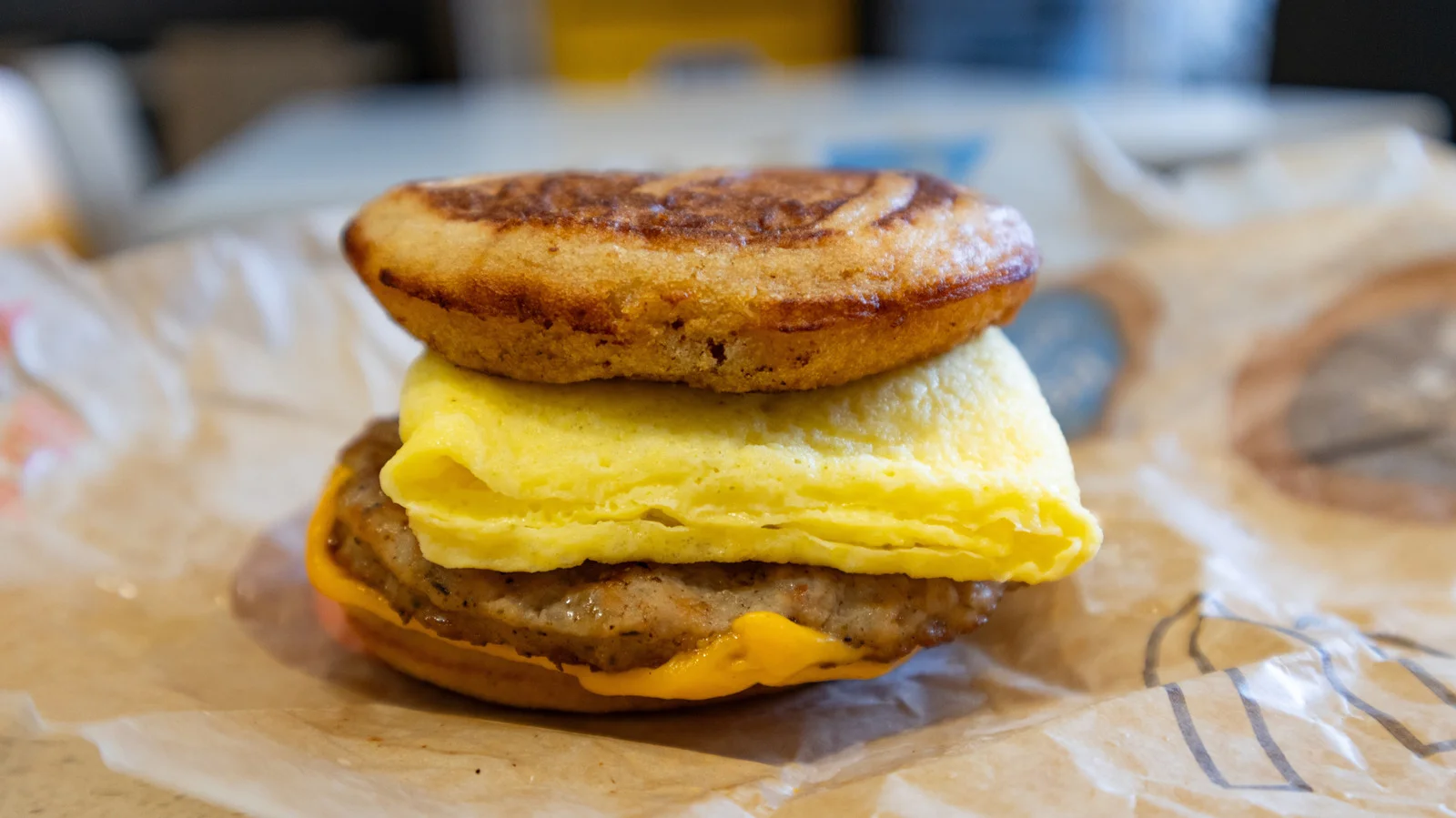
A handheld take on sweet-and-savory breakfast
A pancake-battered, sealed breakfast sandwich brings the sweet-and-savory appeal of a McGriddle into an easy handheld format. The homemade version pairs soft bread with egg, sausage and melted cheese, then grills the filled sandwich until golden. Its appeal is straightforward: it puts familiar breakfast components in a compact package, with a pancake-like coating standing in for the sweet note usually associated with syrup or breakfast pancakes.
The format also changes how those ingredients eat. A conventional breakfast plate keeps eggs, meat and bread separate, while a sealed sandwich holds them together in each bite. That can make the meal easier to carry and serve, though the balance depends on the filling: too much meat or cheese can crowd out the egg, and a heavy coating can overwhelm the bread. The goal is a crisp, browned exterior around a warm center, not a thick layer of batter that turns the sandwich into something dense.
This is more significant than it looks as a home-cooking idea: it turns a familiar fast-food flavor combination into a method that can be adjusted with whatever breakfast ingredients are on hand. The technique is simple, but the order matters. Cook the fillings first, seal the bread around them, then dip and grill the assembled sandwich.
Choosing the bread and filling
Use soft white sandwich bread and a sandwich cutter-and-sealer to create the crimped edges. The bread needs to bend around the filling without tearing, and soft slices are easier to press together than crusty or unusually thick bread. A cutter-and-sealer can trim the bread and press the edges closed in one motion; if you don't have one, the same basic idea is to cut a neat shape and press the perimeter firmly enough to hold.
Cook the eggs fried or baked, then cut them into rounds with a biscuit cutter. Rounds fit neatly inside the bread and help keep the filling contained near the edges. Baked eggs can be cooked in a larger sheet and portioned, while fried eggs give you individual pieces from the start. Either way, let the egg set before assembly. A loose or runny filling can make sealing difficult and may escape when the sandwich is dipped.
American, cheddar or another melting cheese will give the filling a creamy texture. Cheese does more than add flavor: as it warms, it helps bind the egg and meat into a softer center. A strongly flavored cheese can change the character of the sandwich, while a mild melting cheese keeps the focus on the sweet coating and savory filling. Use enough to connect the ingredients, but leave room for the bread to close.
Cooked sausage or bacon supplies the salty, savory contrast. Plant-based meat substitutes work too, and the same approach can accommodate scrambled eggs, sautéed vegetables or a combination of fillings. Here's the thing: flexibility doesn't mean every ingredient belongs in the same sandwich. Ingredients with excess moisture can soften the bread, so cooked vegetables should be drained or cooled before assembly.
Build and cook the sandwich
Fill the bread with egg, cheese and cooked sausage or bacon; plant-based meat substitutes work too. Keep the filling inside the center area, away from the rim. Then press the bread closed and seal the edges. A tight crimp helps keep the ingredients in place during dipping and grilling, but it won't compensate for an overfilled sandwich.
Dip the sandwich in prepared pancake batter, and grill both sides. The coating should cover the outside without soaking the bread for too long. Grill until the exterior is golden and the filling is hot; turning it carefully helps the sealed edge stay intact. If the pan is too hot, the coating can brown before the cheese has time to melt. If it isn't hot enough, the bread may absorb more batter and become soft rather than toasted.
A small cup of maple syrup makes an optional dip. That extra sweetness lets each person control the balance instead of committing the whole sandwich to a sweeter finish. And yet, the sandwich doesn't need syrup to make sense: the pancake coating already supplies the defining sweet note, while the egg, cheese and meat bring salt and richness. A restrained dip is likely to preserve that contrast better than pouring syrup over the sandwich.
The method rewards a little restraint. A clean seal, a moderate amount of batter and a filling that isn't overloaded do more for the result than adding extra ingredients. The crisp edge matters. So does a center that stays tender.
Make-ahead options and variations
For busy mornings, assemble the sandwiches ahead, freeze them and microwave them before serving. Preparing them in advance shifts the work to a quieter moment and makes the format practical for more than a leisurely weekend breakfast. The exact reheating time will depend on the sandwich and the microwave, so check that the center is hot before eating. If the coating softens during reheating, that's a tradeoff for convenience; the freshly grilled version is more likely to keep its browned surface.
Scrambled eggs can replace fried eggs, while sautéed mushrooms and peppers make a meat-free filling. Those vegetables bring a different texture and a less salty flavor, so cheese can provide some of the richness that meat otherwise supplies. Cook the mushrooms and peppers before adding them. Their moisture can seep into the bread, especially if the sandwiches will be frozen and reheated.
For a quicker meat option, add bacon bits or sausage crumbles to the eggs as they cook. This distributes the meat through the egg instead of placing it in a separate layer, which can make each bite more consistent and simplify assembly. It also reduces the need to fit a larger piece of meat inside the sealed bread. If you're working in this space—whether you're feeding a family or planning breakfast ahead—the useful choice is the one that fits your kitchen routine, not a fixed list of ingredients.
What the format gets right
Sealing and battering a sandwich is a small change with practical consequences. It creates a portable meal, gives the bread a browned exterior, and leaves room to swap ingredients without changing the basic method. Similar make-ahead breakfast foods often trade some freshly cooked texture for speed at serving time; freezing this sandwich involves the same compromise. The result can still be satisfying, but the coating and bread may not feel quite like they do straight from the pan.
The most useful principle is the combination of textures: soft bread around a compact filling, with a lightly crisp exterior and a sweet edge. Keep that structure in mind when adapting the recipe. Watery vegetables, oversized pieces of meat and excess batter all work against it. A modest filling and a secure seal make the sandwich easier to cook and eat.
The method leaves room to adapt the filling while keeping the defining combination: pancake flavor outside, savory breakfast ingredients inside. Watch the preparation video on TikTok.



Discussion
Sign in to join the discussion.