Oreo Thins contain less added sugar, saturated fat and sodium per cookie, though all three varieties offer little fiber or protein.
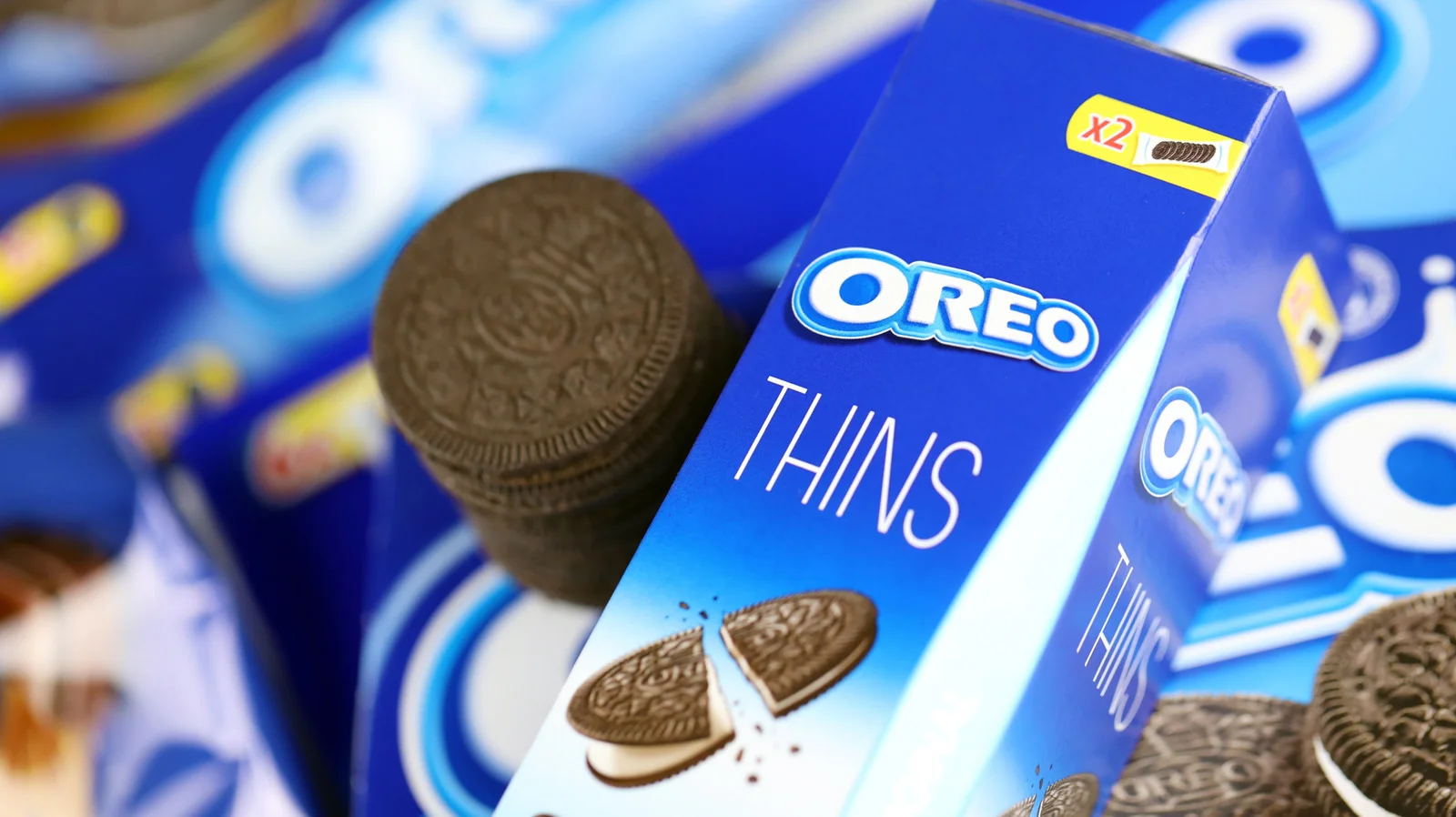
Oreo Thins come out ahead on several nutrition measures per cookie, but their smaller size makes portion comparisons less straightforward. Nabisco lists different serving sizes for each variety, so a cookie-by-cookie comparison is useful for seeing what one piece adds. On that basis, Thins generally contain less added sugar, saturated fat and sodium than Original or Double Stuf Oreos. That doesn’t tell you how much someone will actually eat, but it does show where the differences start.
The advantage doesn’t turn Thins into a nutrient rich snack. All three varieties offer little fiber and protein, and none provides much nutritional value beyond calories. The practical question is how much of the nutrients people are generally advised to limit comes with each cookie, and how quickly those amounts add up across a portion. A smaller cookie can look like a lighter choice while still making it easy to reach for another.
Serving sizes tell only part of the story
A labeled serving contains four Oreo Thins, three Original Oreos or two Double Stuf cookies. Each serving of Thins and Double Stuf has 140 calories; Original Oreos have 160. Those totals are close, but they describe different amounts of food by cookie count. If you compare packages by serving alone, you can miss how the varieties differ one cookie at a time.
That distinction matters in ordinary snacking, where people may not stop at the serving size printed on the package. Thins provide four cookies for the same stated calories as two Double Stuf cookies, which can make them feel like the more generous portion. Yet the smaller size may also make another cookie seem inconsequential. The label helps with comparison; it can’t predict where you’ll stop.
Fiber and protein are low across the range. A serving of Thins or Original Oreos has less than 1 gram of fiber and 1 gram of protein. Double Stuf has no fiber listed and less than 1 gram of protein per serving. Those figures offer little reason to treat any variety as filling or nutritionally substantial, leaving sugar, fat and sodium as the more useful points of comparison. In other words, the main distinction is how much of those nutrients comes with the cookie, not whether one variety changes the basic role of the snack.
Thins lead on sugar and saturated fat
None of the three varieties contains trans fat. Saturated fat varies more: each Thin has 0.5 grams, compared with 0.66 grams in an Original Oreo and 1.25 grams in Double Stuf. The FDA recommends limiting saturated fat, with a daily limit of 20 grams. Per cookie, the difference between Thins and Original is small; Double Stuf is the clearer step up.
That gap becomes more relevant when several cookies are eaten. Two Double Stuf cookies match the listed serving size and provide more saturated fat than two Thins would, while four Thins make a larger cookie count possible at the same stated calories. This is the part most people overlook: comparing individual pieces answers one question, but comparing the amount actually eaten answers another. Neither view is wrong; they simply describe different portions.
The gap is larger for added sugar. One Thin has 3 grams, while an Original has 4.7 grams and a Double Stuf cookie has 6.5 grams. At four cookies, that works out to 12 grams of added sugar from Thins, 18.8 grams from Original Oreos and 26 grams from Double Stuf. The FDA’s recommended maximum is 50 grams a day, so the choice can make a noticeable difference within that limit. The comparison also shows why the serving size matters: four cookies is the labeled serving for Thins, but it’s more than the labeled serving of either other variety.
Here's the thing: a per-cookie advantage can be real without making the overall snack a strong source of nutrition. If you’re choosing among these varieties and want to limit added sugar, the figures favor Thins. But the size of the difference depends on how many cookies make it onto the plate, and the label’s serving count is only a reference point.
Sodium is lower, though the gap matters less
Oreo Thins have 24 milligrams of sodium per cookie. Original Oreos contain 43.3 milligrams, and Double Stuf has 45 milligrams. Thins are lower, but the sodium amounts in all three are modest compared with their added sugar figures. For someone comparing these cookies specifically, sugar and saturated fat are the more notable distinctions in the supplied figures.
That doesn’t make sodium irrelevant in every eating pattern; it means this comparison gives it less weight than the differences in sugar. A nutrition label is most useful when read across the nutrients that matter to the person eating the food, alongside the amount they actually have. One cookie at a time, Thins have the lowest sodium figure. For a full day’s diet, these cookie numbers alone don’t show the whole picture.
What the comparison means in practice
My read: Thins are the lighter option if you’re comparing cookies one by one, especially for added sugar. That’s a meaningful advantage, though it isn’t a reason to treat them as a health food. All three remain low in fiber and protein, and their differences are most useful as a guide to choosing a portion.
Four Thins and two Double Stuf cookies each come to 140 calories, while three Original Oreos come to 160. Those serving comparisons make clear why calorie totals alone won’t settle which variety is preferable. What this means for you depends on whether you’re prioritizing fewer calories, less added sugar per cookie, or a portion that feels satisfying. The numbers here are underwhelming as a nutrition story, but they’re enough to make the cookie count matter.
That said, preference and portion size still shape the outcome. The better choice ultimately depends on how many you eat and which Oreo you prefer. A smaller cookie can help someone choose a lower-sugar option; it can also make portion control harder if the reduced size encourages extra cookies. A simpler way to read the label: compare both the amount per cookie and the amount in the portion you expect to eat.
Small cookies. Bigger arithmetic.



Discussion
Sign in to join the discussion.