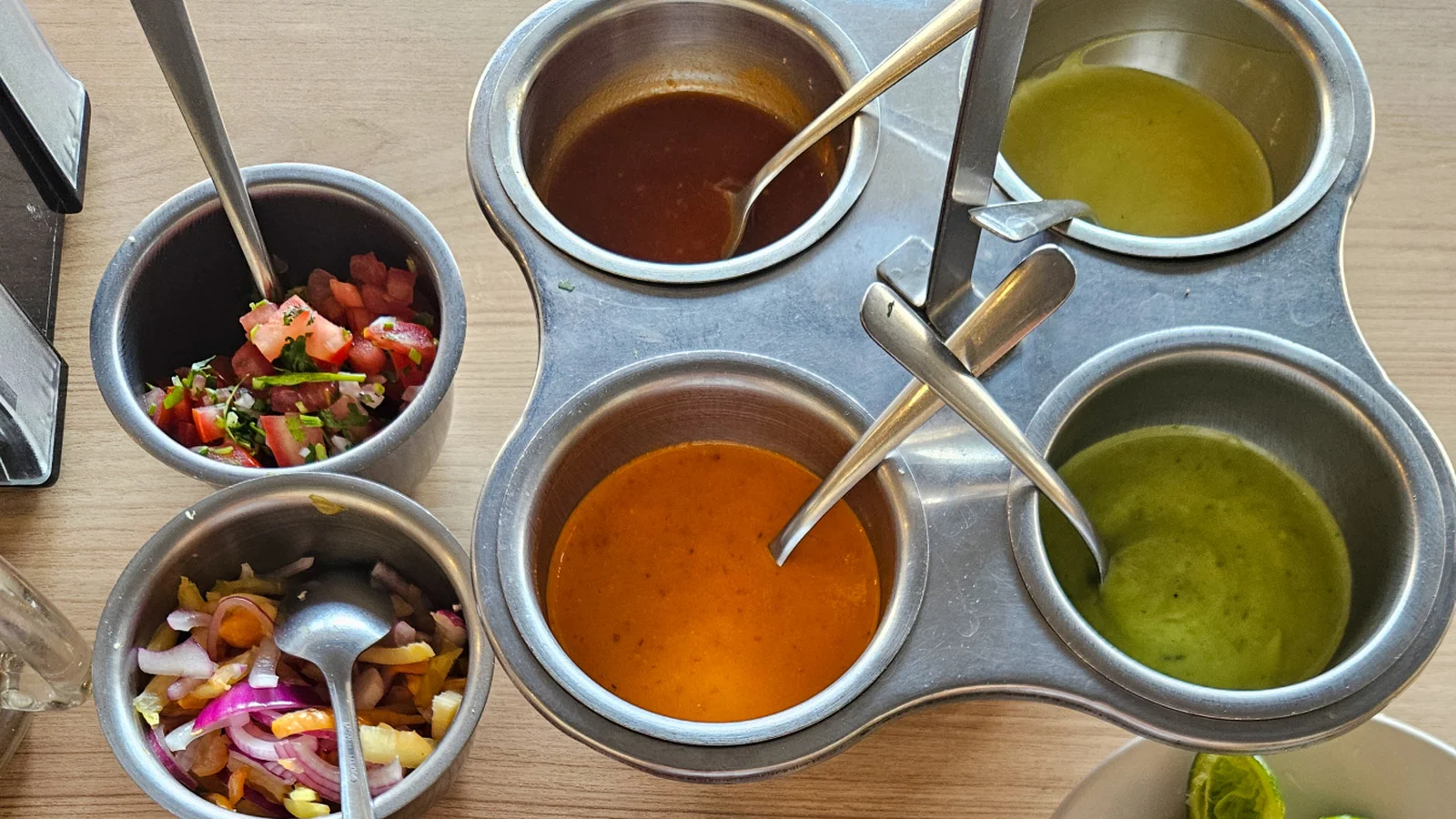
Taste salsa before adding it, and use each serving spoon only for its own container. Small courtesies help preserve the meal and the salsa bar for everyone.
Start with the salsa, not the spoonful
Salsa can sharpen a dish or take it over. At a Mexican taqueria, a little restraint lets you enjoy both the sauce and the food it’s meant to accompany. Taste before pouring, and keep the salsa bar’s serving spoons with their own containers.
That advice matters because salsa isn’t one fixed flavor or level of heat. Mexico’s regional cuisines bring a wide range of flavors and cooking traditions to the table, and their salsas reflect that variety. A sauce might be built around tomatoes, tomatillos, chiles, fruit or avocado; it might be served fresh or fire-roasted. Some are mild and bright, while others bring enough heat to dominate a bite.
The many ways to make salsa reflect its versatility, but they also explain why a first taste is useful. Color and appearance won’t reliably tell you how a salsa will taste or how much heat it carries. A few drops let you judge its acidity, texture and spice alongside the food, before you commit to more.
Let the dish keep its own flavor
Some diners add several spoonfuls before trying a bite. That can mask the dish’s own flavors, and an untested salsa may be hotter than expected. If a taqueria offers several options, start with a few drops, taste, then add more if the pairing works for you. It’s a simple way to find the right heat without losing the meal underneath.
Here’s the thing: salsa is meant to contribute to a dish, and the right amount depends on both the sauce and what’s on the plate. A strongly seasoned salsa can compete with delicate fillings, while a brighter or milder one may bring balance. There’s no universal portion to follow. Your first bite is the best guide.
This is more significant than it looks. Adding salsa gradually gives you a chance to notice what each option does, rather than turning every taco into the same combination of heat and acidity. And if you find a pairing you like, you can always add another spoonful.
Keep the salsa bar pleasant to share
Dining customs can be unwritten, but small gestures matter across different food cultures. At a salsa bar, use the spoon assigned to each container and return it there. A spoon moved between bowls can mix the flavors and make the shared setup less pleasant for the next person.
(And this is the part most people overlook.) The serving spoons help keep each salsa distinct, so moving one between containers can affect what other diners get. It’s a small point of shared etiquette, but the fix is easy: take a little with the spoon provided, then put it back where you found it.
If you’re working your way through several options, taste them one at a time and keep track of which spoon belongs to which bowl. No elaborate ritual required. Just a moment of attention at a busy counter.
Take only what you’ll eat
Taqueria salsa bars may also offer lime wedges, chopped cilantro and onion alongside the sauces. Treat them as a shared buffet: take a serving for your meal, and leave the containers for other diners. Filling up extra containers to take home goes beyond what the setup is for.
Shared condiments work best when diners take what they need for the meal in front of them. A small portion leaves room for others and makes it easier to keep the station tidy. If you want more, you can return for another serving.
A little restraint leaves room for choice
There’s no need to skip the salsa or follow a rigid ritual. Taste first, add it in a measured amount, and keep serving utensils where they belong. That’s enough to enjoy the sauce without overpowering the dish or making the salsa bar harder for others to use.
For you, the practical payoff is simple: you get to discover how the salsa and the food work together, then adjust as you go. Less guesswork. And yet, restraint doesn’t mean using less salsa than you enjoy; it means giving yourself the chance to decide before the sauce takes over.



Discussion
Sign in to join the discussion.