Tokoroten, a unique Japanese summer dish made from kanten, offers a versatile culinary experience with its delicate noodles served sweet or savory.
Quick Overview
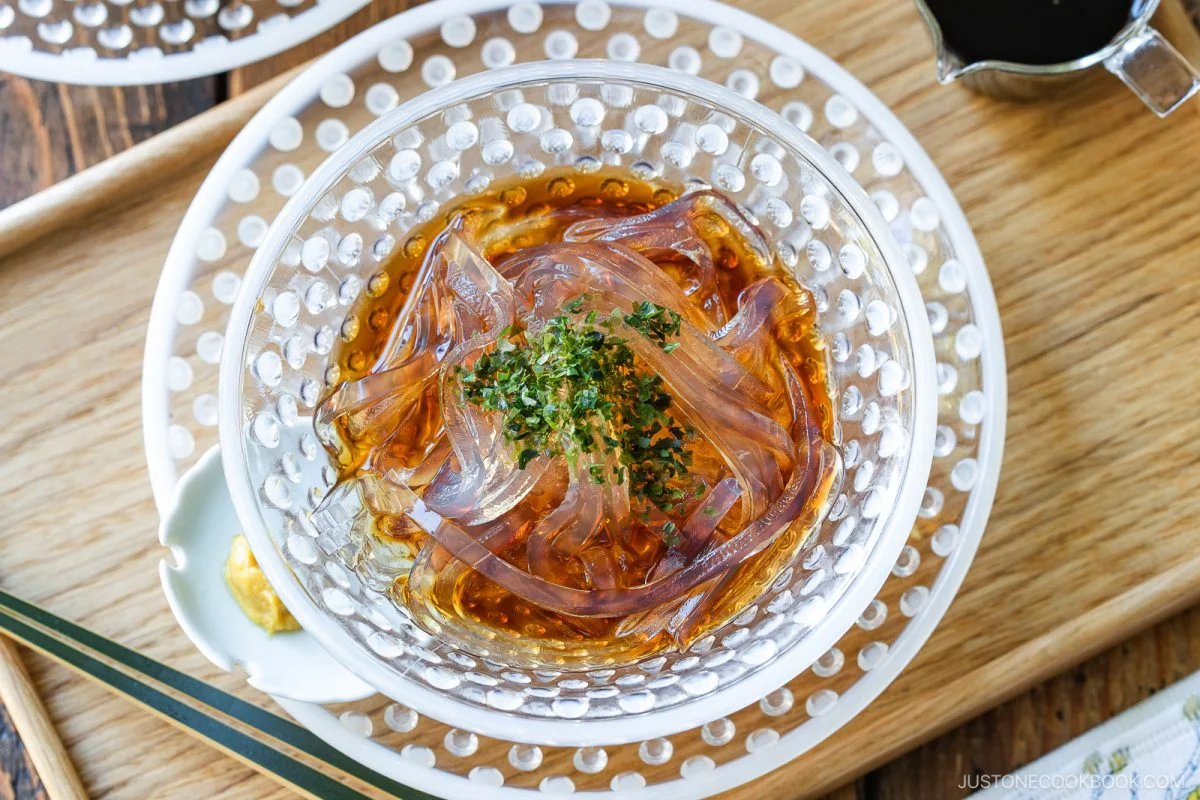
So, what exactly is tokoroten? Picture clear, slippery noodles that carry little flavor on their own but come alive when paired with complementary sauces. The pressing technique ensures each strand has a consistent shape and texture, elevating your dining experience with a clean, cool bite. As it’s virtually flavorless, the true charm of tokoroten lies in the toppings you choose. Whether you prefer the tangy hit of vinegar-soy sauce or the indulgent sweetness of kuromitsu and kinako, there’s something for everyone.
Why You'll Appreciate It
Here’s why tokoroten is worth your attention:
- **Tentsuki Technique**: The tentsuki press creates perfectly uniform noodles, ensuring consistency that isn't replicable with a knife. Each push transforms the jelly into a delightful array of strands—visually appealing and texturally satisfying.
- **Optimal Boiling Time**: A full two minutes of boiling is essential for dissolving the kanten completely. Skimping on time can lead to a grainy texture that compromises the dish’s integrity.
- **Culinary Variety**: Enjoy two distinct regional styles—Kanto’s vinegar-soy nihaizu for a refreshing salad or Kansai’s sweet kuromitsu-and-kinako version for dessert, showcasing the dish’s flexibility.
- **Room-Temperature Setting**: Unlike gelatin, which requires refrigeration, kanten can set at room temperature within an hour. This means you can prepare it with minimal fuss and achieve a delightful, snappy texture.
If you're looking to explore Japanese summer recipes, you can't skip out on this intriguing dish. Its combination of healthful ingredients and adaptability makes tokoroten a standout choice that brings bright, fresh flavors to your table.
Crafting the Kanten Jelly
To begin, combine kanten powder with water in a saucepan. It’s crucial to heat the mixture gently until it reaches a light boil. Allow it to simmer for a full two minutes; this duration is essential for ensuring the powder fully dissolves. Afterward, transfer the mixture into a nagashikan mold or any glass container with a removable base. Let it cool undisturbed for about an hour before wrapping it with plastic. Then, refrigerate for at least three hours, or overnight, until it’s solidified.
Unmolding and Shaping
Once the jelly is adequately cooled, the next step is to release it from the mold. Carefully run a knife around the perimeter to separate it from the sides. If you opted for a glass container, gently lift the jelly out with the insert and flip it onto a clean cutting board.
Now, it’s time to cut the jelly into manageable blocks. Aim for rectangular pieces that will fit comfortably inside your tokoroten press (the traditional tool known as tentsuki). Precision is key here—cut the blocks a little shorter than the press chamber dimensions, around 1 to 2 cm, to ensure they can be easily processed.
Pressing to Perfection
With the blocks ready, insert them into the tokoroten press and use the pressing stick to carefully push the jelly through. This technique transforms the blocks into long, noodle-like strands. The result should be uniform, showcasing the unique texture that makes tokoroten such a delight.
Serving Suggestions
Finally, serve the tokoroten in individual bowls. For a savory twist, pour vinegar-soy sauce over the top, add a sprinkle of aonori seaweed, and place a dollop of karashi hot mustard on the side. If you're leaning towards a sweet indulgence, dust the strands with kinako and finish off with a drizzle of kuromitsu syrup. Each option highlights the versatility of this traditional dish, allowing you to adjust flavors to your liking.
Conclusion: Embracing Tokoroten’s Versatile Pairings
This exploration of tokoroten highlights more than just the dish itself; it underscores the delightful ways it can be paired to elevate your culinary experience. Whether you're opting for the savory flavors typical in Kanto with a soy vinegar mix or leaning towards the sweetness prevalent in Kansai with kuromitsu, the choices open up a world of flavor combinations.
Achieving that perfect dish means thinking beyond the basics. For instance, pairing chewy
Shiratama Dango with sweet tokoroten creates a textural contrast that makes every bite an adventure. Alternatively, the refreshing chill of
Mugicha offers a delightful palate cleanse on warmer days.
There’s a lot to say for the versatility of tokoroten. Serving it with dishes like
Salmon Nanbanzuke not only adds depth to your meal but also introduces an element of lightness, making it a suitable option for lunch or dinner. And if you're in the mood for something refreshing, a glass of
Cold Brew Green Tea can provide the perfect accompaniment.
The takeaway here is clear: tokoroten is a canvas waiting for your creativity. As you experiment with different pairings—from rich sauces to refreshing drinks—you're sure to discover unexpected delights that make this traditional Japanese dish worthy of a place in your kitchen. So, let your palate guide you and enjoy the vast array of flavors waiting to be explored.



Discussion
Sign in to join the discussion.