Olive tapenade, Italian cold cuts and extra mozzarella turn grilled cheese into a crisp, briny take on New Orleans’ muffuletta.
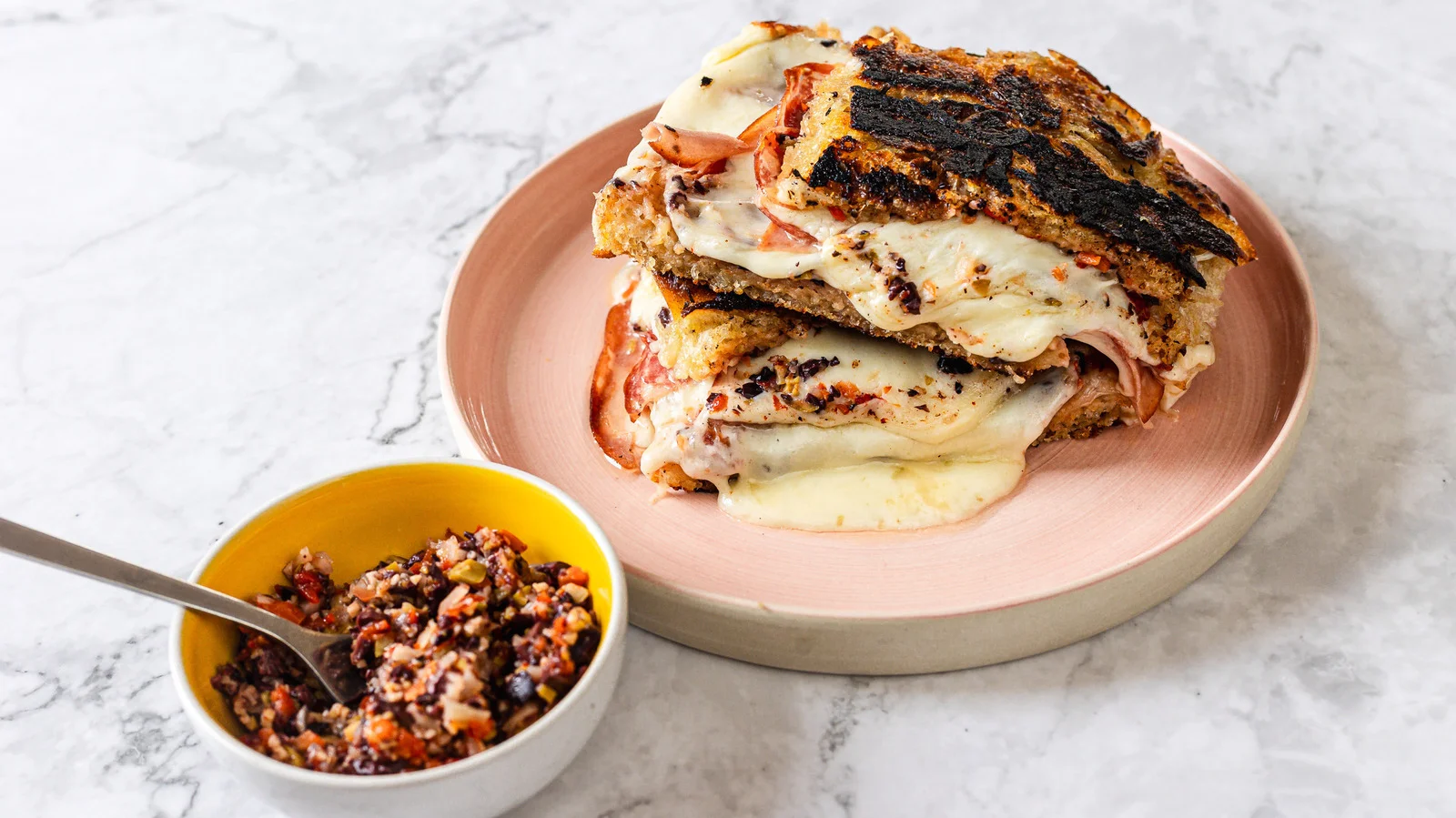
A New Orleans classic in grilled cheese form
A muffuletta’s briny olive spread and Italian cold cuts make a natural partner for melted cheese. This grilled cheese mashup keeps the New Orleans sandwich’s signature flavors but shifts the balance toward cheese, with a crisp, pressed exterior and a gooey center. The change is more than a swap in cooking technique: it makes the sandwich feel familiar to anyone who knows grilled cheese, while giving that comfort-food format a sharper, saltier profile. Every bite has to make room for several assertive ingredients.
The muffuletta reflects the mark Italian immigrants left on New Orleans cooking. While the city is often associated with Creole and Cajun cuisines, the sandwich offers another route into its food culture. In this version, the familiar grilled cheese format gives the olive and cured meat flavors a warm, melty setting. That’s a useful reminder that a city’s food identity rarely fits into just one category; local cooking often carries influences that sit alongside its best-known traditions. Here, the Italian deli character remains clear even as the bread and cheese move to the foreground.
The spread sets the balance
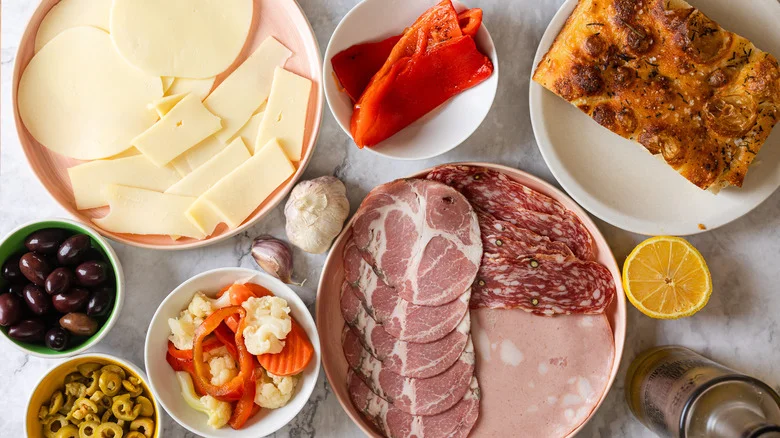
The olive spread does much of the work. Spicy giardiniera pickles, olives, bell pepper, lemon zest and olive oil are pulsed into a chunky, spreadable tapenade. Its tang and salt cut through the richness of the cheese, while the pickles bring heat. That contrast matters because a sandwich built around melted cheese and cured meat could quickly taste heavy without something sharp to interrupt it. The tapenade also gives the filling texture: a little unevenness and crunch against the soft cheese and toasted bread.
It’s a spread with a clear job, and piling it on indiscriminately may make the sandwich harder to manage. A chunky consistency helps keep the ingredients recognizable, while the oil binds them into something that can be spread across bread. If you're working with leftovers, the same combination of salty olives, bright lemon and pickled vegetables can bring character to other simple dishes. The recipe’s appeal depends partly on that flexibility. The sandwich is the main event, but the tapenade needn’t be limited to it.
For the meat, the recipe uses soppressata salami, capicola and mortadella. Muffuletta combinations vary: some versions swap in ham for the mortadella or capicola, so the selection can be adjusted while keeping the sandwich’s Italian deli character. That flexibility is practical, since the point is the interplay of cured meat, olive spread and cheese, rather than a single fixed roster of cold cuts. Each meat contributes its own seasoning and texture, though the source doesn’t assign one a specific role in the final blend. Choose a combination that works together and let the spread provide the briny counterpoint.
More cheese, crisp edges
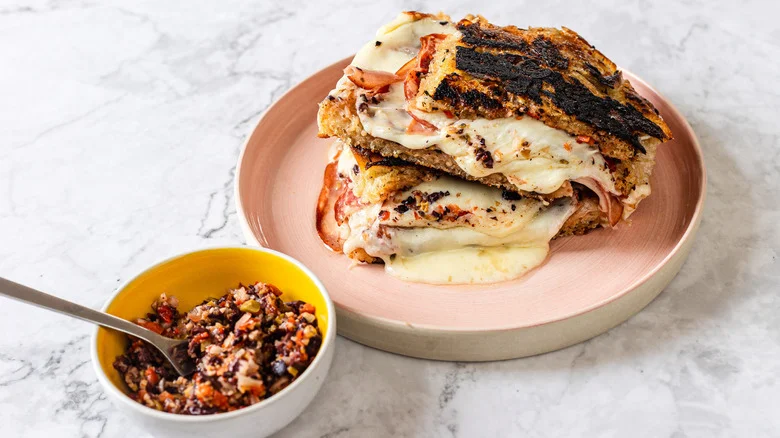
The recipe’s defining choice is its cheese-to-meat ratio. Traditional muffulettas tend to put the cold cuts first, with a slice of provolone; here, the cheese takes the lead, using twice as much as the meat. Mozzarella joins the mix to help create a softer, stretchier filling as it melts. This is more significant than it looks: changing the proportions changes what the sandwich asks of the olive spread, which now has to season a larger amount of rich, mild cheese. The result reads as a grilled cheese first, with the muffuletta’s deli flavors still firmly in view.
Cooking technique matters when the sandwich is this full. Press it in the pan under the weight of another heavy pan, which helps the bread toast evenly while the interior warms through. The pressure also helps the layers hold together as the cheese softens, though a stuffed sandwich still calls for care when it’s turned or served. The result is a crisp shell around melted cheese, savory cold cuts and sharp olive spread—a contrast a standard muffuletta doesn’t provide. Crisp outside, yielding middle. That’s the simple pleasure this format is designed to deliver.
Heat management is part of that equation. Similar grilled sandwiches can brown on the outside before a dense filling has warmed, so pressing and giving the interior time to heat are sensible parts of the method. The source doesn’t specify a cooking temperature or timing, and neither should be guessed here; the useful principle is to aim for toasted bread and a fully warmed center. If you're making a version with more filling, the balance between browning and melting becomes especially noticeable. A dark crust alone doesn’t guarantee the cheese has reached the texture the recipe is after.
Where the flavors can go next
The same ingredients can travel beyond sandwiches. A muffuletta-inspired bruschetta layers tapenade, fresh mozzarella and cold cuts beneath a fresh tomato topping. That pairing points to the spread’s wider appeal: its salty, tangy bite can balance both rich cheese and bright tomato, making leftovers useful well beyond the skillet. It’s a small but telling advantage for a component that brings several flavors together at once.
There’s a broader cooking idea here, too: a familiar format can make a layered regional sandwich easier to approach without erasing its defining tastes. The grilled cheese structure is straightforward, while the olive spread and cold cuts supply the more distinctive character. That said, the balance is delicate. Too much emphasis on cheese could flatten the muffuletta identity; too much spread or meat could crowd out the reason to make it grilled cheese in the first place (and this is the part most people overlook). The success of the mashup rests on keeping those elements in conversation.
For readers who want the flavor combination without committing to a full sandwich, the bruschetta offers another route, while the tapenade can make use of remaining ingredients. Neither option needs to replace the original; they show how a strong, salty spread can anchor different preparations. What this means for you is simple: the recipe’s most reusable idea may be the pairing of olive tang with rich dairy, not just the pressed sandwich itself. The mashup is playful, but its appeal comes from a sound bit of kitchen logic.



Discussion
Sign in to join the discussion.