Japanese curry cubes bring warm spice and a savory-sweet sauce to an easy chicken casserole topped with refrigerated dough.
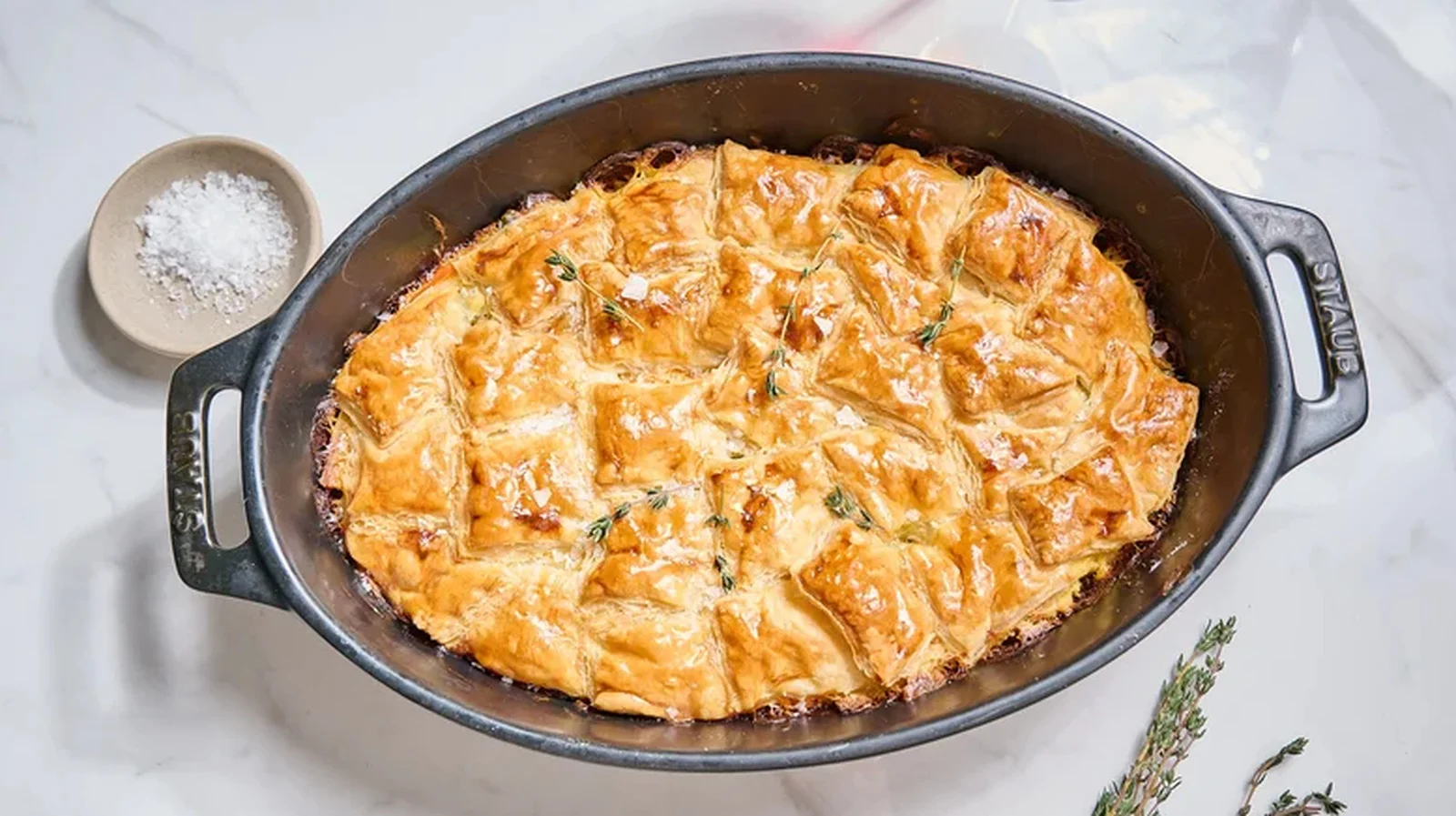
Japanese curry gives chicken pot pie casserole a deeper, gently spiced filling with little extra work. Boxed curry cubes melt into a velvety roux, adding toasted spice and savory-sweet flavor without much chili heat. A lid of refrigerated biscuit or crescent dough keeps the dish firmly in weeknight territory. The appeal is practical: you get the comfort of a baked chicken pie while the curry mix supplies much of the seasoning and body. That shortcut still leaves room to adjust the filling, but it also means the curry cubes set the dish’s central flavor.
Build the filling around the curry
Soften onions in a pot, then add carrots, potatoes, and chicken stock. When the potatoes are tender, stir in shredded rotisserie chicken or leftover roast chicken. For a more homemade base, the stripped chicken carcass can be simmered into chicken stock. Starting with stock gives the vegetables and chicken a savory liquid to absorb, while cooking the potatoes until tender before adding the meat helps keep the chicken from spending too long in the pot.
Add Japanese curry cubes, such as S&B Golden Curry Sauce Mix, and cook until the sauce thickens and turns fragrant. Spoon the filling into a casserole dish, cover it with refrigerated dough, and bake until the top is cooked through. The cubes are designed to dissolve into liquid, so stirring them in gradually can help distribute the seasoning and avoid clumps. Check the filling’s thickness before it goes into the dish: the topping needs to bake above it, and a very loose filling can make the bottom of the crust soggy.
Get the topping right
Refrigerated biscuit or crescent dough is part of what makes this a weeknight dish, but the two don’t behave exactly alike. Biscuits generally make a thicker, more substantial lid; crescent dough tends toward a lighter, layered top. Either way, arrange the dough so steam has a path to escape and the surface can cook through. Follow the package’s baking guidance as a starting point, since dough thickness and casserole depth affect how long the topping takes.
Here's the thing: the filling and topping have different jobs. The curry mixture should be seasoned and thick enough to eat on its own, while the dough provides contrast and a browned finish. If the top colors before it’s cooked through, the center can still be doughy. A brief pause after baking also helps the filling settle, making it easier to serve.
Adjust the flavor and make it your own
A few additions can shift the filling toward brighter, sweeter, or more aromatic flavors. Garlic and ginger deepen the aromatics; shredded apple or pear adds sweetness, while a splash of red wine brings acidity. Soy sauce can sharpen the seasoning and add umami. These additions work best as small adjustments, since the curry cubes already bring a concentrated blend of spices and salt. Taste the filling before adding more seasoning, especially if the stock is salted.
The vegetables are flexible, too. Cabbage, mushrooms, and sweet potatoes all fit. Ground beef or turkey can replace the chicken, and cubed tofu makes a vegetarian version. Leftover smoked brisket brings a pronounced smoky note. Those swaps change more than the main ingredient: mushrooms and cabbage release moisture as they cook, while sweet potatoes add their own sweetness. If you're working with a different protein or a mix of vegetables, cook the filling until its texture and thickness look right before adding the topping.
This is more significant than it looks: curry cubes make the recipe adaptable because they provide a stable starting point, not because every variation will taste the same. A smoky meat, a sweet vegetable, or a meat-free filling will each steer the casserole in a different direction. And yet, the format is forgiving. You can use what’s available and still keep the basic rhythm: soften the vegetables, build the filling, add the curry, then bake it under dough.
Plan for leftovers and meal prep
For meal prep, the curry filling can also become hand pies: tuck it into pastry and freeze the pies for later. Store-bought puff pastry works well, as shown in this savory sweet potato hand pie recipe. The casserole’s appeal is its adaptable base: curry cubes do the flavor-heavy lifting, while the topping and add-ins can follow what’s already on hand. The filling needs to be cool enough to handle before it’s enclosed in pastry, and it shouldn’t be watery; excess liquid can interfere with sealing and leave the pastry damp.
The same batch can therefore serve two purposes: dinner in a casserole dish now, and portable portions for another meal later. (And this is the part most people overlook.) The filling’s texture matters just as much as its flavor when you change the format. For hand pies, a thicker mixture is easier to contain; for a casserole, a little more sauce can help keep the filling spoonable beneath the crust.
Flexible, but still dependent on a well-balanced filling.



Discussion
Sign in to join the discussion.