Peanut butter, brown sugar and an egg make soft flourless cookies, with easy options for shaping and adding chocolate, jam or flaky salt.
A three ingredient cookie with a different texture
Three pantry ingredients are enough for soft, flourless peanut butter cookies: creamy peanut butter, brown sugar and an egg. That short list makes the recipe useful when you want a quick bake without measuring flour, but it also shapes what comes out of the oven. These cookies won’t have the structure or crisp edges of a flour based dough; their appeal is a tender center and a concentrated peanut butter taste.
The method is straightforward: mix everything in one bowl until the dough is smooth, then bake it right away or refrigerate it for later. There’s no separate dry mixture to prepare, which keeps the process simple and cleanup brief. The tradeoff is that each ingredient has a visible role. Peanut butter supplies most of the body and flavor, while the egg helps bind the mixture and the brown sugar brings sweetness and moisture.
This is more significant than it looks: with so few ingredients, small choices can affect the finished cookie. Creamy peanut butter gives the dough a more even texture and makes the results easier to predict. Chunky peanut butter brings bits of nut and extra crunch, but can make the cookies less likely to spread and more crumbly. If you’re after a neat thumbprint, creamy is the safer choice; if you prefer an irregular bite, chunky has its case.
Shape the dough for the occasion
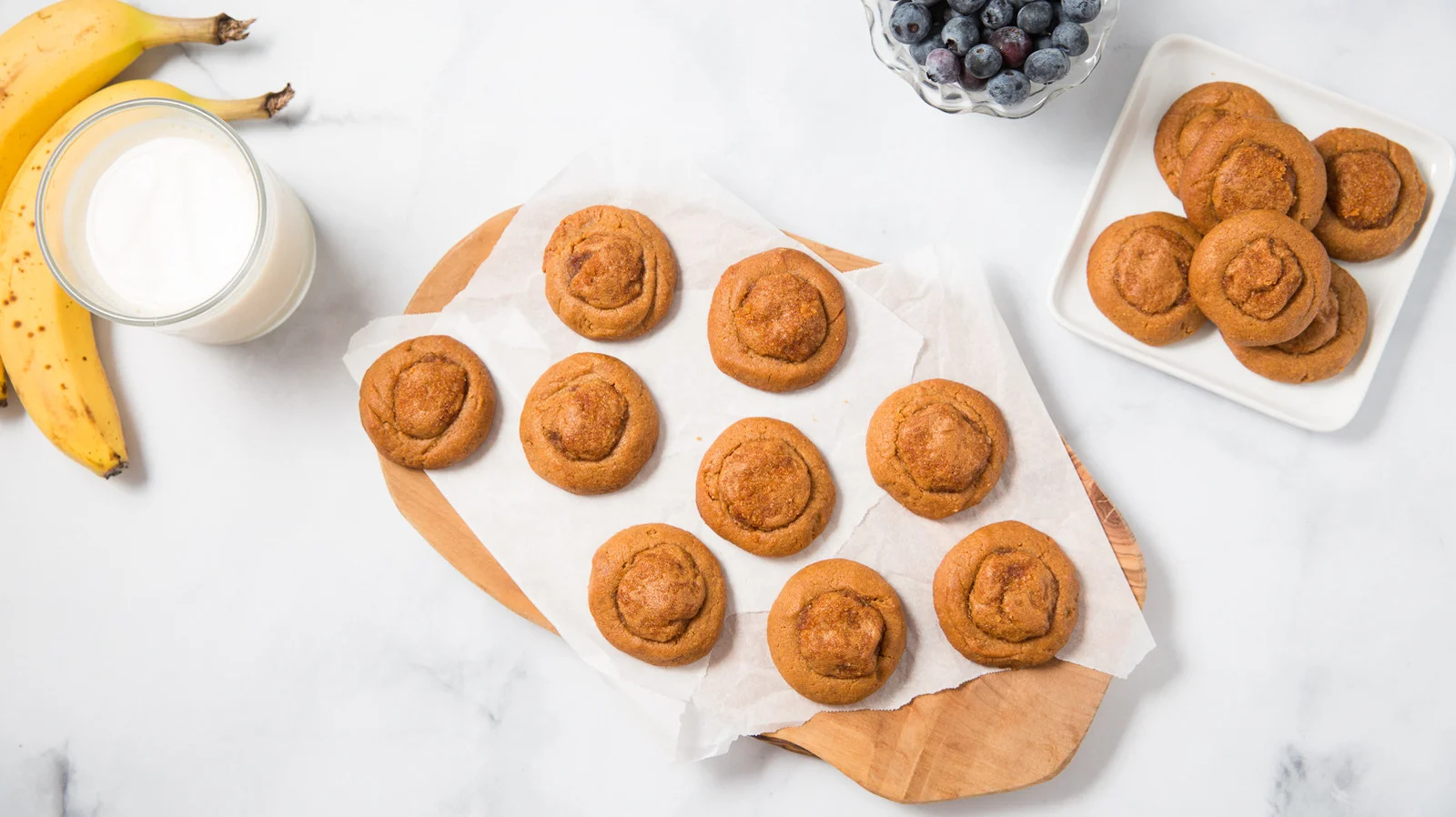
For thumbprints, roll the dough into 1-tablespoon balls and press a hollow into each one. That center creates room for a filling after baking, while the rounded shape gives the cookies a more finished look. Make the indentation with care: the dough is soft, and pressing too hard can leave a thin base that’s more likely to break.
Or flatten the balls with a fork to make the familiar crisscross pattern. The marks are more than decoration; they help flatten the dough into a shape that can bake evenly. Either way, expect a moist, tender cookie with a strong peanut butter flavor. The texture is closer to a soft, dense bite than to a crisp, airy biscuit. A little rustic.
Because the recipe contains no flour, the dough may feel different from cookie dough built around wheat flour. Don’t judge it by whether it handles exactly the same way. The useful cues here are whether the ingredients are fully combined and whether the portions hold their shape long enough to transfer to the baking sheet.
Finish with salt, chocolate or jam
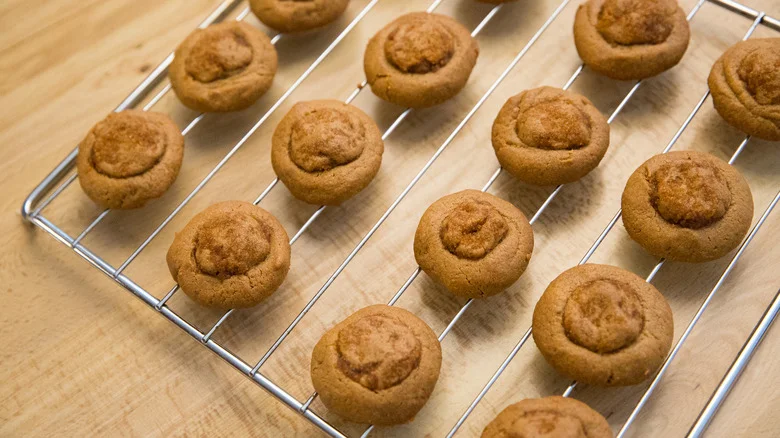
Let the cookies cool on the baking sheet before moving them. They’re especially delicate while hot because the dough contains no flour, so giving them time to set helps them hold together. This step asks for patience, but it’s part of the recipe rather than an optional flourish: a warm cookie can seem ready and still fall apart when lifted.
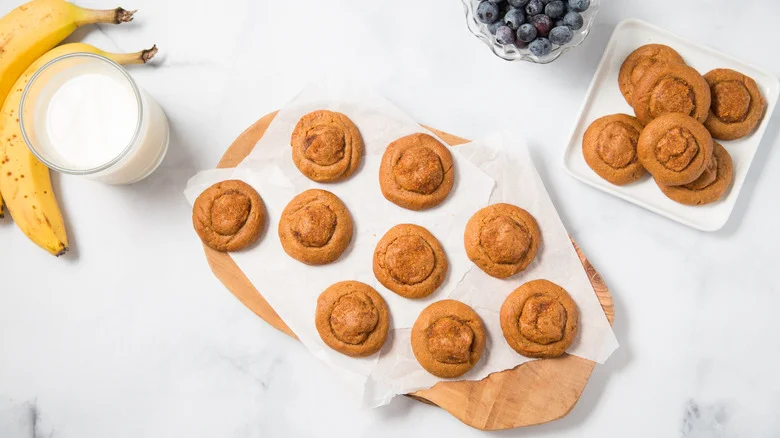
A pinch of flaky sea salt adds contrast to the brown sugar and brings out the peanut butter’s nutty flavor. For thumbprints, try melted chocolate or fruit jam in the center; jam gives the cookies a familiar PB&J note. Add a filling once the cookie is stable enough to handle, and keep in mind that the center is where the flavor can shift most. That said, the plain cookie has a clear purpose too: it lets the peanut butter lead.
They also work alongside coffee or tea, or as the base for an ice cream sandwich. The latter makes the soft texture an advantage, though you’ll want the cookies fully cooled before assembling so the filling doesn’t soften them further. If you’re baking for a quick snack, a little flaky salt may be all the finishing touch they need.
What the simplicity means for the bake
A three ingredient recipe has an obvious advantage: it asks little of the baker and makes use of familiar pantry staples. But simplicity doesn’t mean every version will behave identically. Peanut butter brands and textures can vary, and this recipe offers no flour to absorb differences in moisture or give the dough a familiar framework. The result is best approached as a small, flexible bake, with texture shaped by the peanut butter and handling.
There’s also a practical limit to what the recipe promises. It’s an easy route to a soft peanut butter cookie, not a blank canvas for every cookie style. You can change the shape or add a topping, but the central character remains rich, tender and distinctly peanut forward. For readers who want a quick dessert with minimal measuring, that’s a fair bargain; for those expecting a crisp, bakery style cookie, it may be underwhelming.
Here's the thing: the cooling time and the choice of peanut butter matter more here than elaborate technique. Keep the dough smooth, shape it gently, and let the cookies set before moving them. The recipe’s appeal is its restraint, and the best result comes from letting those three ingredients do their work.



Discussion
Sign in to join the discussion.