Layer coconut and pecans under chocolate cake mix, sweetened milk and butter for a low-effort German chocolate dessert with plenty of room to customize.
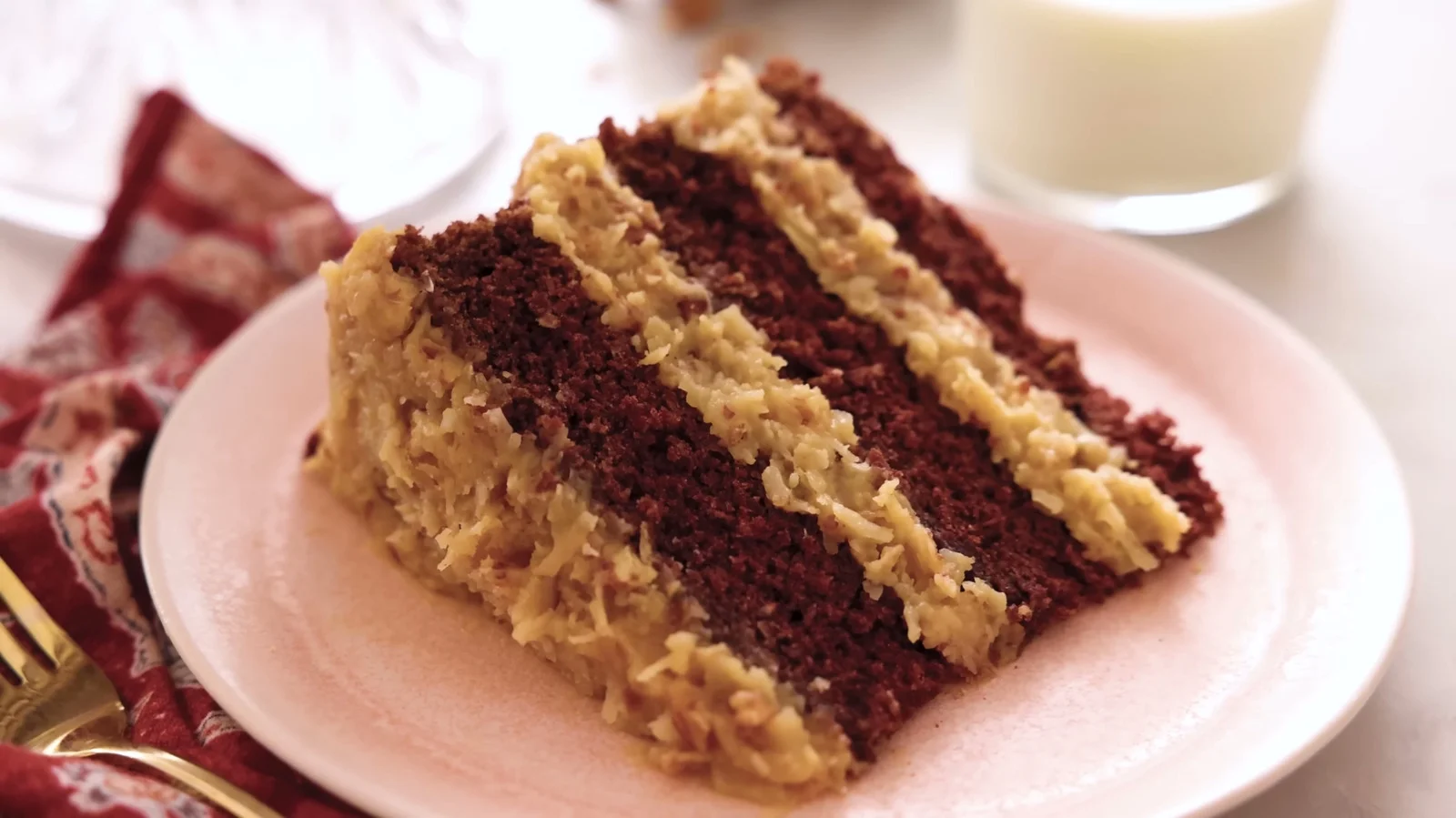
German chocolate cake’s coconut and pecan topping does most of the work in this shortcut dessert. The appeal is practical: boxed chocolate cake mix supplies the familiar base, while the topping brings the toasted, chewy, nutty character people often associate with German chocolate cake. Layer coconut and pecans beneath the mix, add sweetened milk and melted butter, then bake for a dessert that takes little hands-on effort. The method trades the precision of a traditional layer cake for a softer, spoonable result.
That trade-off matters. This isn’t a cake built around neat layers, careful frosting, or an even crumb; it’s a bake where the ingredients settle and mingle as they heat. The topping’s texture and flavor carry much of the experience, while the boxed mix keeps preparation straightforward. If you’re looking for a low-effort dessert to serve warm, that’s a sensible bargain. If you want clean slices and a polished finish, the format has limits.
How the layered method works
The method borrows from the classic dump cake: assemble the ingredients in a rectangular baking dish and let the oven bring them together. Start with shredded coconut and chopped pecans, cover them with dry cake mix, then pour over a can of sweetened milk and melted butter. There’s no mixing or beating; the cake mix absorbs the liquid as it bakes. That simplicity also means the order of the layers matters, since the ingredients aren’t blended into one uniform batter beforehand.
In cakes made from scratch, mixing helps distribute moisture and creates a consistent batter. Here, the ingredients do that work unevenly as they heat, which is part of the point. The dry mix takes on liquid, while the coconut and nuts remain concentrated near the bottom. Similar layered bakes often reward a little patience after coming out of the oven: a short rest can make serving easier as the hot, soft mixture settles.
The result is rich and moist, with coconut and pecans adding texture. Salted butter can temper some of the sweetness. A few additions can push the base toward a more caramel-like finish. That balance is the main decision for the cook: the condensed milk and cake mix already make a sweet dessert, so extra sugar or candy will change the character as much as the texture.
This is more significant than it looks: the topping isn’t merely decoration. It gives the cake contrast, and it’s what separates this shortcut from a plain chocolate cake made from a box. The coconut brings chew; the pecans add crunch. A warm serving lets those textures stand out, while a chilled slice may feel denser and more settled.
Ways to adjust the layers
For a chewier, caramel-style bottom, combine the coconut and pecans with extra melted butter and brown sugar. Chopped toffee candy also works: Heath is one option, while Snickers, Mars or Twix bring their own mix of chocolate and other flavors. Chocolate chips are a simpler choice if you want to skip the toffee notes. Each addition shifts the result, so it helps to think of the topping as the recipe’s main point of customization rather than a place to add every sweet ingredient at once.
Extra butter and brown sugar make the bottom richer, but they also push the dessert further toward a very sweet, soft bake. Candy adds familiar flavors, though its other ingredients can make the finished topping less focused on coconut and pecans. Chocolate chips keep the profile simpler. Here's the thing: choosing one direction usually makes the result easier to understand and enjoy than piling on several competing additions.
Evaporated milk can stand in for condensed milk, and the cake mix is flexible. Devil’s food is a common pick, but other chocolate varieties work too. Yellow or vanilla mix offers a less chocolate-heavy take. The milk substitution changes the sweetness and richness, so it’s best treated as a variation rather than an identical swap. The mix choice is more direct: it sets the flavor of the cake portion without changing the basic layered idea.
There’s also a version with a more frosting-like finish. Prepare the cake mix according to its package directions and pour it over the coconut layer. Swirl in cream cheese mixed with powdered sugar and melted butter; it melts into the cake and adds to its fudgy texture. This approach asks for more preparation than pouring dry mix over the topping, but it offers a softer, richer finish. The swirl also means each portion may have a different balance of cake and cream cheese.
Serving and what to expect
Serve the cake with ice cream, whipped cream or salted caramel sauce. Let it cool for a few minutes before cutting so the slices hold together. The key is the layered format: it keeps the preparation simple while leaving plenty of room to tailor the topping and cake flavor. Because the center is meant to be moist, don’t expect the firm structure of a conventional frosted cake; a serving may be easier to lift once it has had time to settle.
(And this is the part most people overlook.) The simplest version is also the clearest test of the method: coconut, pecans, cake mix, sweetened milk and butter each have a distinct job. Additions can make it more decadent, but they can also obscure the contrast that gives the dessert its character. Start with the basic layers, then adjust the next bake to suit your taste. Less fuss. A warm, generous dessert with plenty of room for personal preference.



Discussion
Sign in to join the discussion.