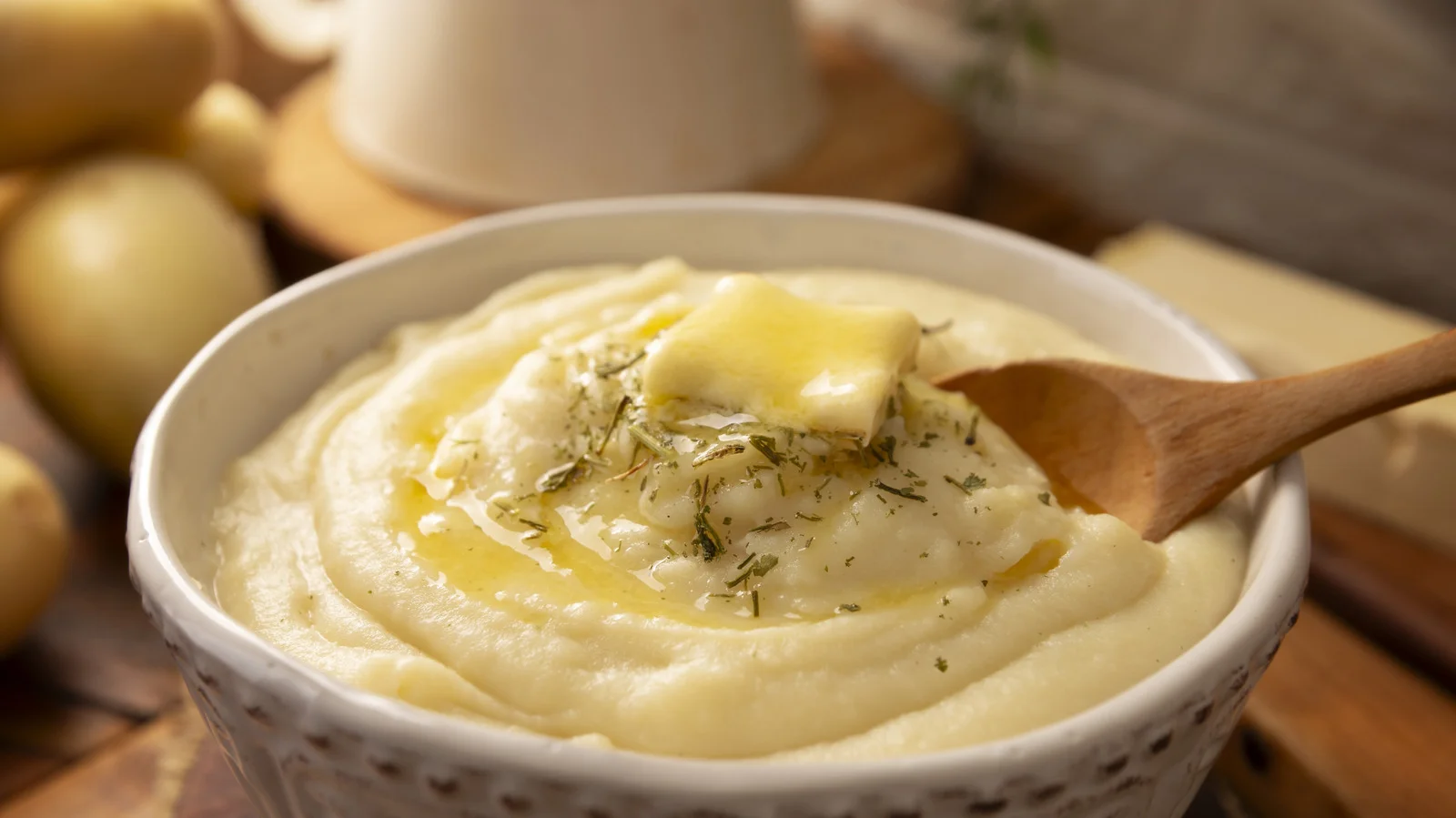
A spoonful of Boursin melts into mashed potatoes for a richer texture and gentle garlic flavor. Adjust the dairy and try other flavors or cheddar.
A small change with a noticeable payoff
Boursin gives mashed potatoes a quick flavor and texture upgrade. The soft, spreadable cheese melts into warm potatoes, adding creaminess and a mild garlic note without requiring a separate sauce or extra preparation. This is more significant than it looks: a single addition can change both the seasoning and the texture of a familiar side.
Garlic & Fine Herbs is an easy place to start, but the amount is up to you. A spoonful can lend a gentle savory note; more will make the cheese a stronger presence. There’s no fixed ratio in this method, so taste as you go and decide whether you want the potatoes to remain the main event or share the spotlight.
That flexibility is useful because mashed potatoes vary. A batch made with a little milk will behave differently from one already enriched with cream or butter, and the potatoes themselves may absorb liquid at different rates. Add the cheese gradually, then adjust the consistency once it has melted through.
Why Boursin works in mashed potatoes
Created in Normandy by French cheesemaker François Boursin, the cow’s milk cheese is crumbly yet spreadable. That combination makes it easy to portion and stir into hot potatoes, where it softens and blends into the mash. The result is a familiar side with a more pronounced dairy richness and a mild garlic flavor.
The method is straightforward: make mashed potatoes, add a spoonful of Boursin, and stir until it’s incorporated. Warmth does much of the work, so there’s no separate step to prepare the cheese. For a weeknight meal, that simplicity is the point; for a holiday table, the same technique can add more character without changing the basic recipe.
Texture is the detail to watch. Boursin brings moisture as well as richness, so adding it to potatoes that are already loose can leave the mash softer than you intended. If you’re working in this space—whether cooking for a busy evening or planning a larger meal—hold back some of the usual dairy until you’ve seen how the cheese affects the potatoes.
Choose a flavor and adjust the dairy
Garlic & Fine Herbs, a Boursin staple since the 1960s, pairs naturally with potatoes because its savory notes suit the dish’s mild flavor. Shallot & Chive offers another savory option, while Caramelized Onions & Herbs brings a deeper taste. Black Truffle & Sea Salt is more pronounced, so use it sparingly and taste before adding salt.
Flavor choice changes how much seasoning the finished dish needs. A sharper or saltier cheese can make extra salt unnecessary, while a milder flavor may leave room for more. Here's the thing: potatoes can absorb seasoning unevenly, so stir well before deciding the mash needs another pinch.
If you’re making mashed potatoes from scratch, start with less milk or cream than usual. As Boursin melts, it contributes moisture along with richness, particularly if you add a full package. Stir it in gradually, check the texture, and add dairy only until the potatoes reach the consistency you prefer.
Less at first. It’s easier to loosen thick potatoes with more milk or cream than to correct a mash that’s become too soft.
Finish with cheddar
For a heartier finish, melt shredded cheddar over the Boursin mash. The cheeses bring different flavors and textures: Boursin softens into the potatoes, while cheddar adds a familiar, fuller finish. That said, this extra layer can make an already rich side more substantial, so it’s best treated as an option rather than a required step.
The practical order matters. Stir in the Boursin before finalizing the dairy and seasoning, then add cheddar if you want another layer of savory flavor. If the cheddar is melted over the top, it also gives the dish a distinct finish instead of folding every ingredient into one uniform mixture.
What this simple upgrade changes
Boursin doesn’t transform mashed potatoes into a different dish; it shifts the balance of a familiar one. The cheese adds flavor and moisture at the same time, which means the cook has to pay attention to texture and seasoning rather than follow the usual dairy amounts automatically. (And this is the part most people overlook.) The cheese itself can supply enough richness that the rest of the recipe needs less.
For a weeknight side, that’s a useful shortcut because the cheese handles more than one job. For a holiday meal, choosing a stronger flavor or adding cheddar can make the potatoes feel more deliberate, though the dish can quickly become heavy if every addition is used generously. A measured start, followed by tasting, is the sounder approach.
There’s no need to make the technique complicated. Begin with a spoonful, stir until it melts in, and adjust the dairy, salt, and cheese from there. A small change, handled carefully.


Discussion
Sign in to join the discussion.