Contraband Coffee in Brunswick East showcases sustainable design through industrial reuse, solar power, and thoughtful interior aesthetics.
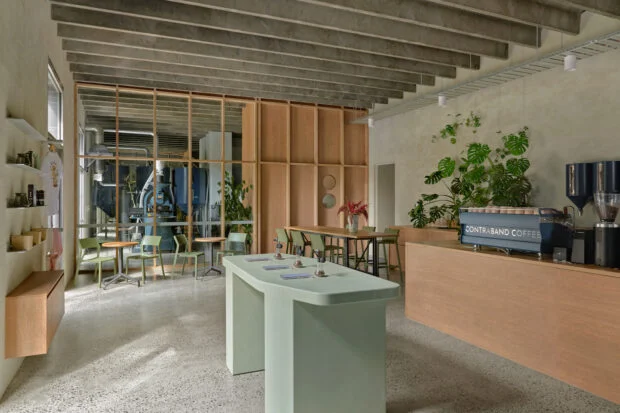
Project: Contraband Coffee
Location: Brunswick East, Victoria, Australia
Opened: 2026
Design: Taylor Knights
Landscape architecture: TCL
Mural: Chris Costa
Sustainable Practices in Design
Contraband Coffee, a cafe and roastery in a repurposed industrial warehouse, stands out for its commitment to sustainability. Located in Brunswick East, this project represents the second effort by Taylor Knights, who designed the original location in nearby Preston. The cafe operates entirely on solar power, employing electric coffee roasters and using electric vans for deliveries. Collaboration with a local waste management service ensures the responsible disposal of soft-plastic packaging, coffee grounds, and other waste.
What this means for Contraband Coffee isn’t just operational efficiency; it also sets a precedent for how food and beverage establishments can operate without leaving a substantial ecological footprint. By utilizing electric roasters, for instance, the cafe minimizes greenhouse gas emissions, reflecting a growing trend among cafes to adopt eco-friendly technologies. This proactive approach to waste management is becoming increasingly important in the industry as consumers not only expect quality products but also ethical practices.
According to Taylor Knights Director Peter Knights, “The project demonstrates that environmental responsibility doesn’t need to be expressed through technology alone; it can also be found in the careful reuse of existing buildings and materials.” This perspective shapes the design ethos at Contraband Coffee, harmonizing modern aesthetics with sustainable practices. The thoughtful reuse of industrial spaces symbolizes a shift away from new construction towards adaptive reuse, which is gaining traction globally, as it aligns with a desire to maintain historical integrity while promoting sustainability.
Architectural Elements and Interior Design
The building's existing structural elements, including concrete ceilings and floors, were retained and enhanced to create a warm, inviting atmosphere. The previously dark space has been transformed through the introduction of large glazed openings along the northern facade, allowing natural light to flood in. This feature also connects the interior with a newly designed courtyard. Natural light is more than just a design aesthetic; it can boost mood and even productivity, which is particularly relevant for a community-focused space like a cafe.
Inside, customers can enjoy their coffee at a locally sourced timber counter, or watch the roasting process through a glass partition. With this design, Taylor Knights not only emphasizes transparency but also fosters a deeper connection between consumers and the coffee roasting process, creating an educational experience around coffee culture. The cafe’s thoughtful design extends to the courtyard, where double doors create a fluid transition, breaking the physical barriers between the inside and outside worlds.
Art and Aesthetic Touches
Further enhancing the appeal is a vibrant mural by artist Chris Costa, which offers a splash of color against the predominantly restrained industrial backdrop. This not only beautifies the space but also creates an emotional resonance with visitors, promoting community engagement. Art in public spaces has frequently been discussed for its ability to foster connections between patrons and businesses, making Contraband Coffee a hub for creativity and social interaction.
The design also features benches made from aluminum frames repurposed from the studio's prior installation at the National Gallery of Victoria, linking the cafe to the broader cultural landscape. This aspect of the design speaks volumes about the cafe's commitment to sustainability—turning waste into functional art. Such choices resonate deeply with customers who are increasingly conscientious about their consumption habits and are looking for businesses that share their values.
Implications and Future Outlook
This cafe isn’t just about coffee; it’s a statement. As consumers become more aware of the environmental implications of their choices, businesses like Contraband Coffee are likely to pave the way for future establishments. More cafes and eateries might feel encouraged to follow suit, adopting similar sustainable practices, reclaiming space, and promoting local artists. This could lead to a cultural shift toward prioritizing sustainability across the board—not just in coffee, but in how we approach retail and dining experiences.
If you're working in this space, consider the implications of consumer expectations and the growing trend of sustainability in food service. While it's essential to serve quality products, the method of service and the operational ethos may soon become your brand’s most critical selling points. With this cafe, it’s evident that sustainability isn’t merely a buzzword; it’s an essential component in crafting a successful modern business that engages today’s eco-conscious customers.
Contraband Coffee thus emerges as a notable example, blending sustainability with community, art, and thoughtful design. As it opens its doors, the hope is that its model inspires not just other coffee shops, but various sectors, encouraging a holistic reevaluation of how we interact with our spaces.



Discussion
Sign in to join the discussion.