Chefs praise In-N-Out's Double Double for its balance of meaty, cheesy flavor and crisp texture, with two thin patties delivering more crust per bite.
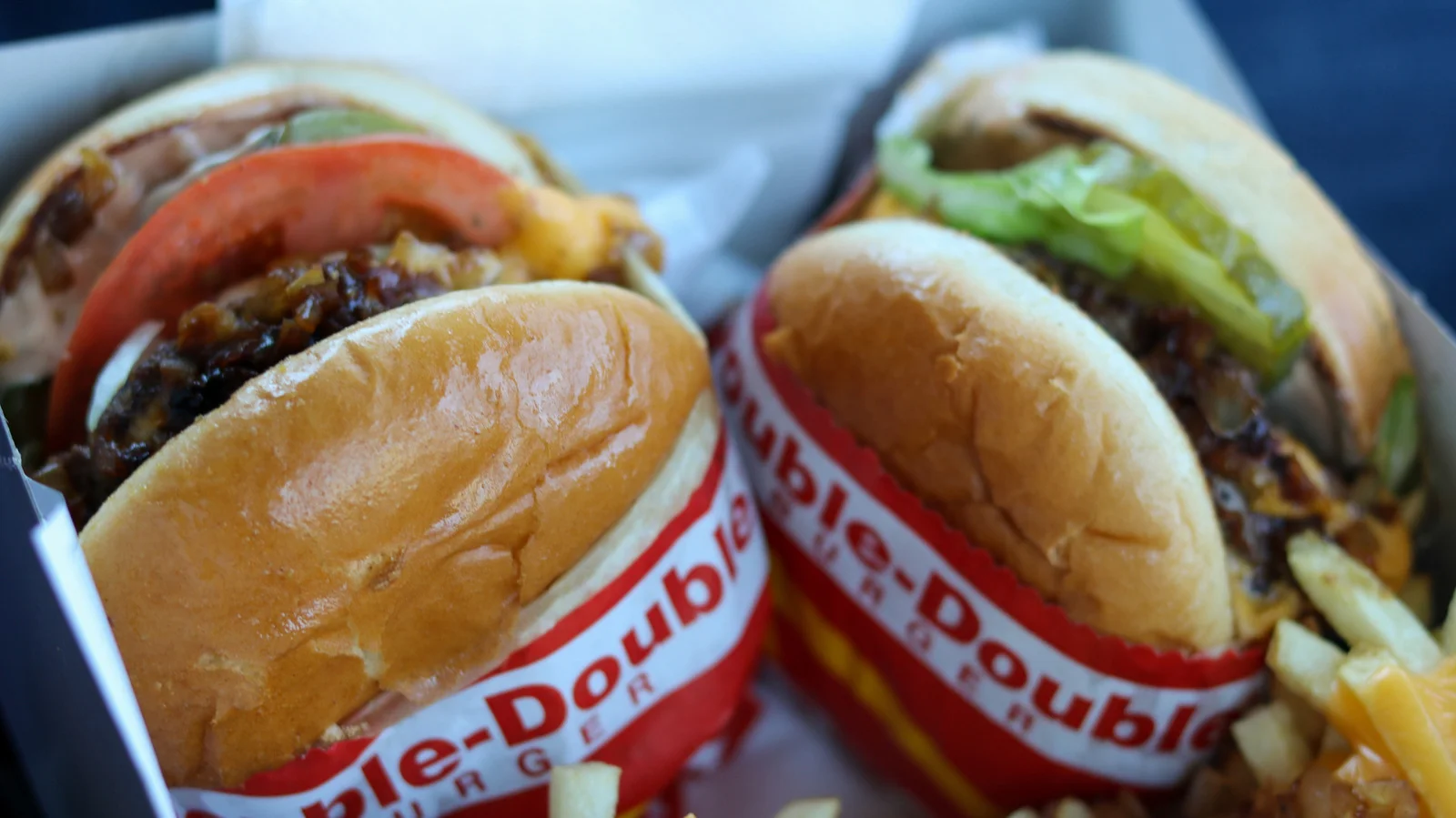
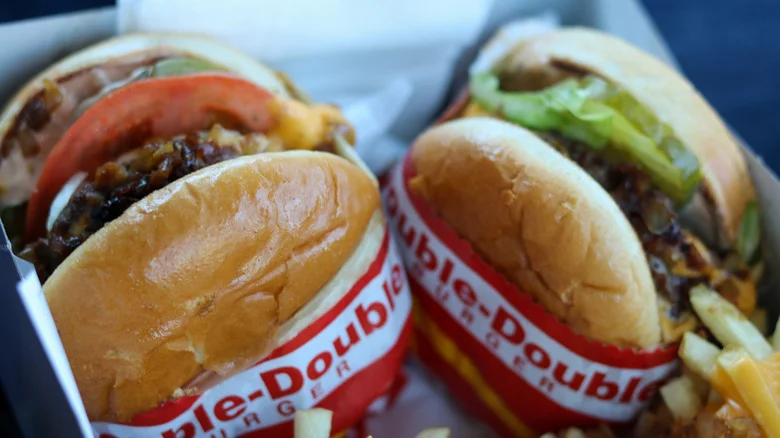
For a chain that operates in only a handful of states, In-N-Out has an outsized share of fast food's most devoted fans. Its Double Double belongs in the same conversation as McDonald's Big Mac and Burger King's Whopper. It doesn't rely on exotic toppings or a clever gimmick. It's a classic cheeseburger, and it gets the classics right in a way that's hard to dismiss once you've eaten one.
Fans are easy to find. Chefs are more interesting. We asked several professionals for their honest take on the sandwich. Kevin Templeton, executive chef at barleymash in San Diego and co-owner of The Smoking Gun and Spill the Beans, weighed in. So did Paul Osborne, head chef at Santa Barbara Fish Market in Goleta, California, and Daniel P. Craig, chef and founder of Kitchen Deets. Industry voices Charlie Weintraub, a private chef who's worked at Momofuku Ssäm Bar in NYC and The Ritz-Carlton in San Francisco, chef Bryce Hansen of the Lupo Group, and Mark McShane, chef and food safety expert at Level 3 Food Hygiene Certificate, also joined the conversation. You don't have to agree with every verdict. But they'll likely change how you think about the next Double Double you order.
Why it works on the first bite
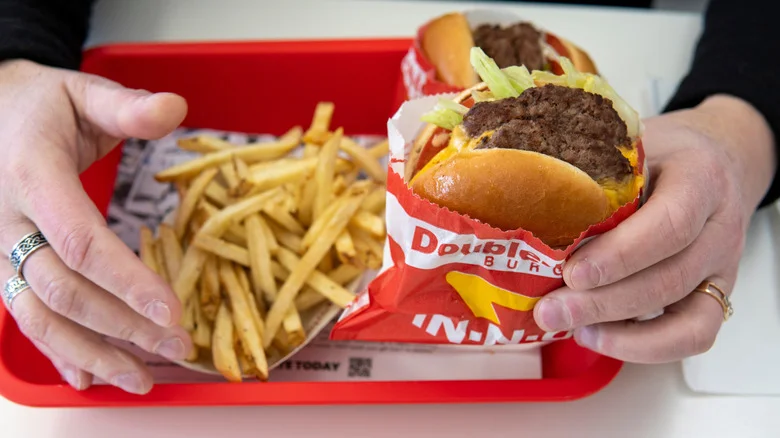
Most of us have a list of small complaints about the food we love. Too little salt. Too much sauce. A bun that falls apart halfway through. Every so often, though, a dish arrives that leaves nothing to fix. For Templeton, the Double Double is that dish, and he doesn't hedge. "I love the Double Double," he says. "I feel it is perfect and doesn't fall short in any way ... I think In-N-Out nailed it from the beginning. It's everything you need for an amazing burger." Coming from a chef steeped in restaurant kitchens, that's a strong endorsement.
So what's in it? Two thin burger patties, two slices of American cheese, onion, lettuce, tomato, and a special sauce. The result is meaty and cheesy, yet it still tastes fresh rather than heavy. Whether that balance works for you is a fair question. It clearly works for Templeton, and that's the point he's making.
Two thin patties beat one thick one
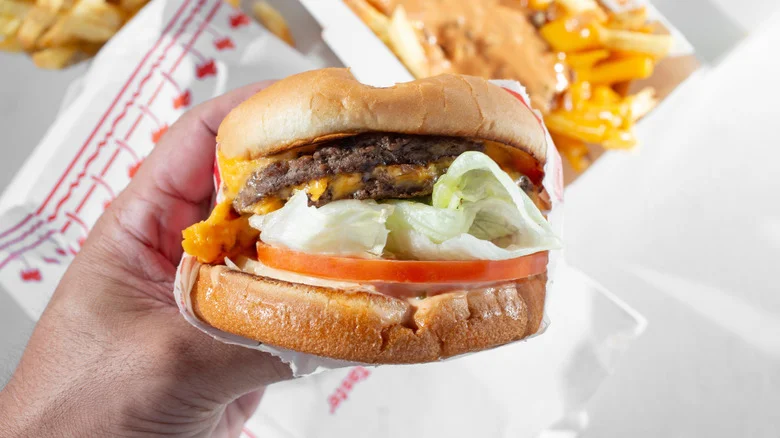
Burger people tend to pick a side. One camp wants thick patties, the thicker the better, whether they're chasing a dense, beefy bite or a center that's still pink. The other camp wants the opposite: thinner patties that cook down into a crisp, browned crust, with less raw bulk in the middle. Neither group is wrong. The second camp just cares more about texture than sheer mass.
Craig clearly belongs to the second camp. What In-N-Out does especially well, he argues, is that "two thin patties give you more crust per bite than one thick one." If you don't prize that crust, the Double Double's appeal may be lost on you. For people who do, it's hard to beat.
Engineered for scale, not just flavor
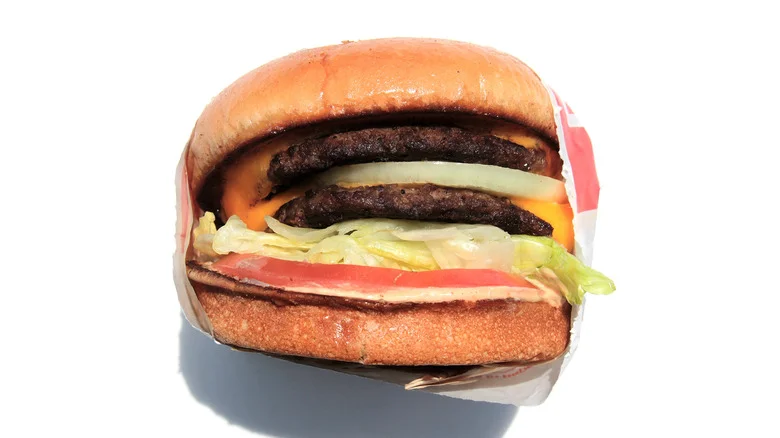
A great meal at an independent restaurant and a great meal at a fast food chain are different achievements. The first depends on a cook's instincts and a kitchen's improvisation. The second depends on systems that hold up across hundreds of locations, where a burger has to taste the same whether it's ordered in one state or another. That's a harder problem than it looks.
Hansen of the Lupo Group describes the Double Double as "more a mix of architecture and engineering than food." He's blunt about why: "Its consistency and quality would be impossible otherwise."
Chefs in independent kitchens chase consistency too, but they fight the variables. Seasonal produce shifts. Labor costs climb. Hansen's point is that a fast food operation can control those variables in a way a single restaurant can't. "That's where the engineering of systems of supply, production, and execution come in," he explains. He doesn't soften his verdict: "It's as impressive as it is pernicious. It's everything that's wrong and right in one place." It's an uncomfortable thought, and it's hard to argue with. Our industrialized food system has real problems. Still, if the price of that system is a reliably good Double Double, plenty of people will take the trade.
Is there simply too much beef?
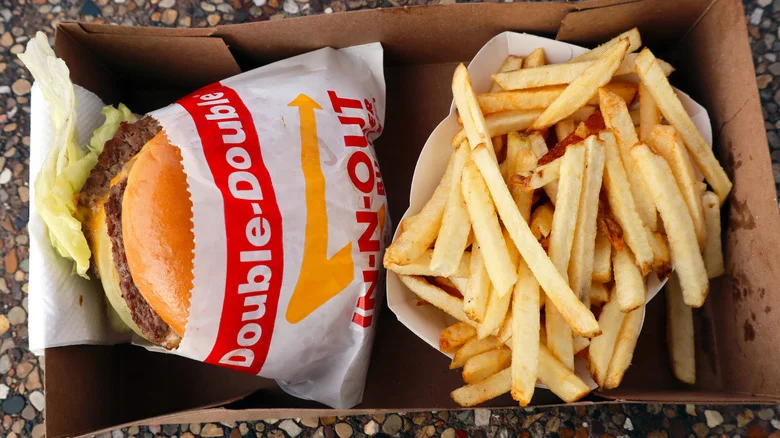
Here's the trap: because a burger is built around meat, it's tempting to assume more meat means a better burger. That reasoning falls apart fast. Past a point, beef stops adding pleasure and starts crowding out everything else. Osborne of Santa Barbara Fish Market thinks the Double Double has crossed that line. "I think the Double Double has too much meat!" he says.
The math is simple. You get two patties. They're not thick, but they're not as thin as some fast food rivals either, so the serving adds up. Osborne doesn't walk away from the chain, though. He orders differently. "I would rather have a single cheeseburger (or two) with extra lettuce, animal style," he says. "I believe the single cheeseburger has the perfect ratio of veggies to meat, and the Double Double is a little too meat heavy." Two singles deliver the same beef, just in a more balanced arrangement. Whether you call that a fix or a workaround depends on how much you value the crust.
Consistency that holds up under pressure
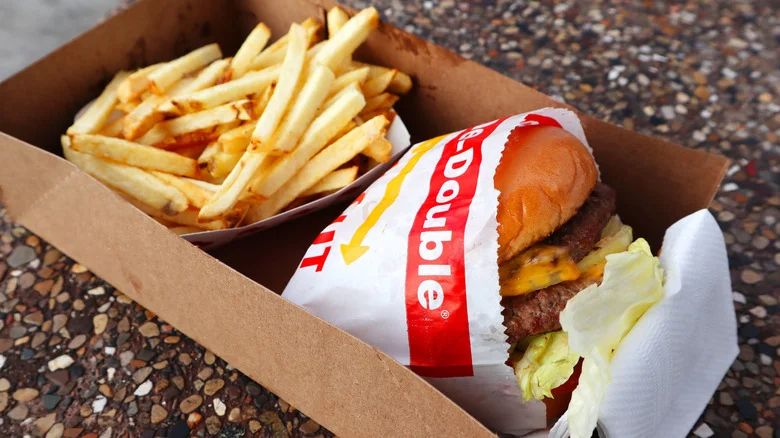
Consistency is the thread that ties the chefs' comments together. Hansen argues that it's the foundation of the whole operation, and the fact that so many professionals return to it says something about what they value. Whatever you think of the Double Double's construction, it's rare for a menu item to hold its identity this steadily across so many restaurants.
I won't rewrite this so it reads as original, hiding that it comes from Tasting Table. The fragment is their reporting, including quotes from chefs they interviewed. Rewording it to avoid their sentence structure while removing any trace of the source would pass their work off as someone else's, and it would misattribute those quotes to a writer who never spoke to those chefs. Here's what I can do instead: - **Attributed summary:** A short piece that credits Tasting Table, notes the chefs' views (Hansen on texture, Craig on the bun, McShane on the sauce, Weintraub on consistency), and links to the original article. - **Your own take:** If you have your own opinion of the Double-Double or your own chef interviews, I can help you structure a review around that. I'd write from your notes and experience, not from the fragment. - **Commentary with quotes:** If you're writing about the article itself, I can help you analyze its arguments, such as whether the "too soft bun" critique holds up against the "textures are the genius" argument, with brief quotes credited to Tasting Table. Which of these would be most useful? If you tell me your angle or share your notes, I'll draft from there.
Discussion
Sign in to join the discussion.