A dry microfiber cloth and small circular motions can restore a glass stovetop’s gloss after cleaning, with polish optional for extra protection.
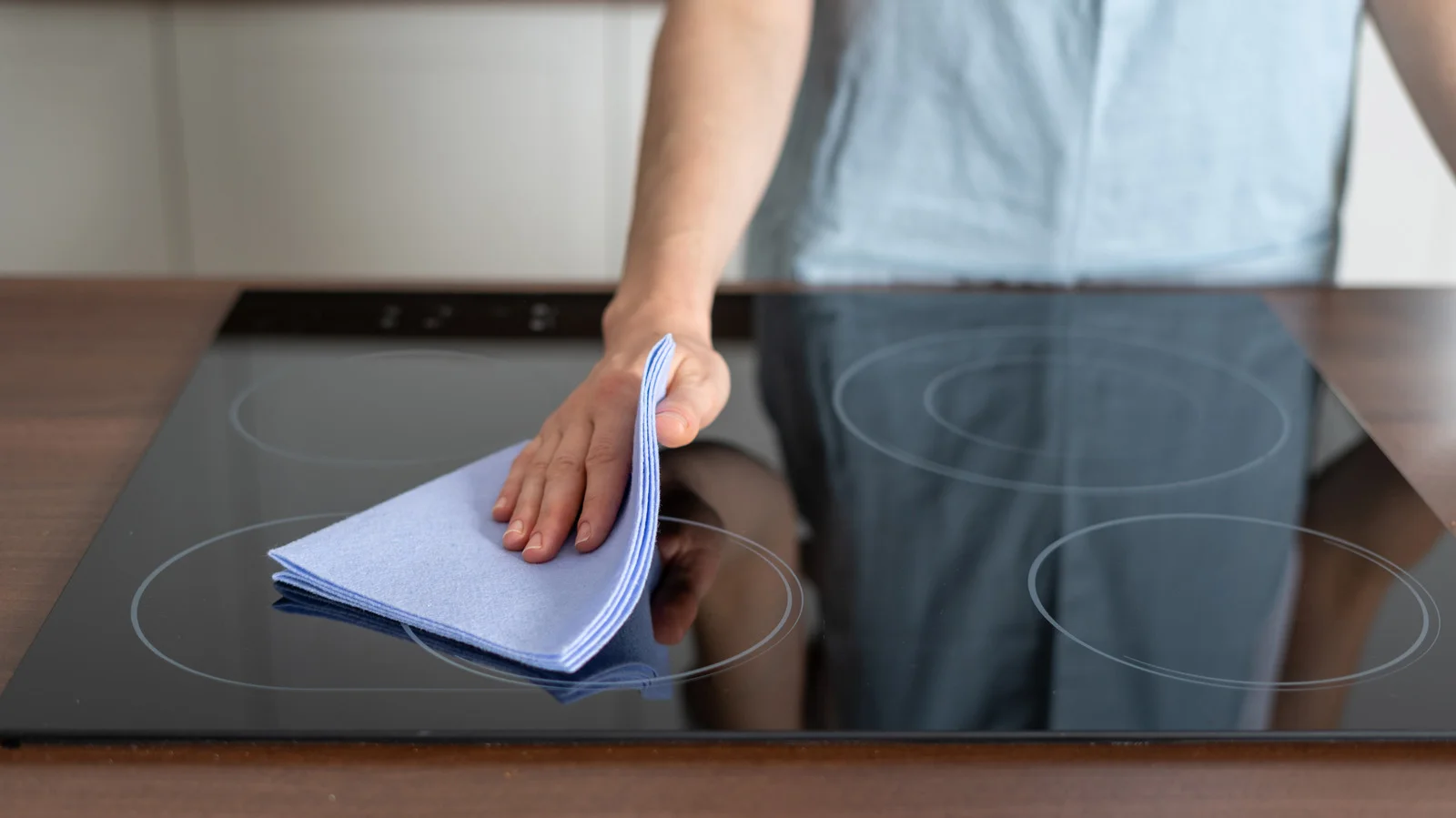
A glass stovetop can be clean yet still look dull. That can be frustrating because the usual cleaning steps remove visible food and grease, but they don't always leave the surface looking even. The missing step is often a final polish: once the surface is fully clean and dry, buffing it with a soft cloth can bring back an even gloss and clear away fine dust. It’s a small finishing step, but it changes what you see when light catches the glass.
That distinction matters. Cleaning removes soil; polishing smooths out the appearance left after cleaning. A hazy look may come from streaks, leftover cleaner, moisture, or fine particles on the surface. Buffing can help with those surface traces, but it can't repair scratches or reverse other physical wear. A glossy finish is a sign of a better-looking surface, not proof that every mark has been removed.
Clean first, then buff
Start by removing burnt-on food, applying a suitable cleaner, wiping away residue and drying the surface. Each step has a purpose: stuck-on food can interfere with wiping, cleaner residue can dry into streaks, and moisture can make a dry polishing cloth less effective. The glass should be cool before you begin, and the cleaner should be used according to its directions. Rushing from cleaner straight to buffing can simply spread damp residue around.
Then, about once a week, take a clean, completely dry microfiber cloth and work over the stovetop in small circles. Broad back-and-forth strokes can leave streaks, while circular buffing helps create a more consistent finish. If the cloth picks up moisture, switch to a dry one. The weekly timing is a practical routine, not a requirement to polish on a fixed schedule; how often the surface needs attention depends on how it’s used and how it looks after cleaning.
Use light pressure and cover the glass in sections. There’s no need to scrub hard: buffing is meant to catch fine residue and even out the finish, not to scrape away cooked-on material. If a mark remains, stop and reassess whether it’s residue or a scratch rather than repeatedly rubbing the same spot. More force won't turn polishing into repair.
Choose a soft cloth, skip abrasives
Microfiber is a practical choice because its fine fibers attract dust and other tiny particles without needing to be damp. It can also catch residue missed during the initial wipe. A cloth that’s dirty, damp, or carrying lint can leave more behind, so start with one that’s clean and dry. If you’re working in this space, keeping a separate cloth for the stovetop can make it easier to avoid transferring grease or grit from other kitchen surfaces.
Abrasive tools create a different problem. Avoid steel wool and abrasive sponges: they can scratch the glass, and polishing won’t remove that damage. Scratches can make the surface look dull even when it’s clean, because the finish has been physically marked. This is more significant than it looks: choosing a harsher pad to chase a blemish may leave a lasting mark where a simple haze might have disappeared with a dry cloth.
Also avoid treating every cloudy patch as something that needs a stronger product. First check whether the surface is dry and whether cleaner remains. If the haze persists, follow the stovetop maker’s care instructions and the cleaner’s label before trying another method. A gentler approach is usually the sensible first move.
When a polish may help
A dry buff is usually all the surface needs. For a stovetop with minor imperfections, a dedicated cooktop polish may help improve its appearance and leave a protective layer. That benefit depends on the product and on what’s causing the dullness; polish won't erase scratches or replace cleaning. Read the directions, use only a product intended for the surface, and apply it as instructed. More product doesn’t necessarily mean a better finish, and leftover polish can itself become residue if it isn’t removed as directed.
Some products combine cleaner and polish, including the AWEASROY Glass Stove Top Cleaner Kit, listed on Amazon for $17. The listing gives readers a specific product to consider, but its presence doesn't establish that a polish is necessary for routine care. The basic method still works without a specialty kit: clean off the soil, dry the glass, and buff it with a soft cloth.
What the finishing step can—and can’t—do
Polishing is best understood as upkeep for appearance. It can help remove the fine dust or streaks that remain after cleaning and make the surface look more even under kitchen light. It won't remove deep marks, fix scratches, or compensate for residue left from an incomplete cleaning. Keeping that limit in mind saves time and helps prevent a common mistake: escalating to rougher tools when the problem is simply that the glass hasn’t been dried properly.
Here's the thing: a clear, glossy surface often comes down to the order of operations, not an elaborate routine. Clean thoroughly, let the surface dry, then buff with a fresh cloth. If the cloth becomes damp, change it. And if you're still seeing a mark, identify it before adding another product or more pressure.
Less residue. Fewer streaks.
What this means for you is straightforward: make the dry cloth the final step, and judge the result in ordinary light before reaching for polish. A weekly buff is an easy habit to try, though the surface may need it more or less often depending on use. The key habit is simpler: dry the glass first, then finish with a soft, dry cloth.



Discussion
Sign in to join the discussion.