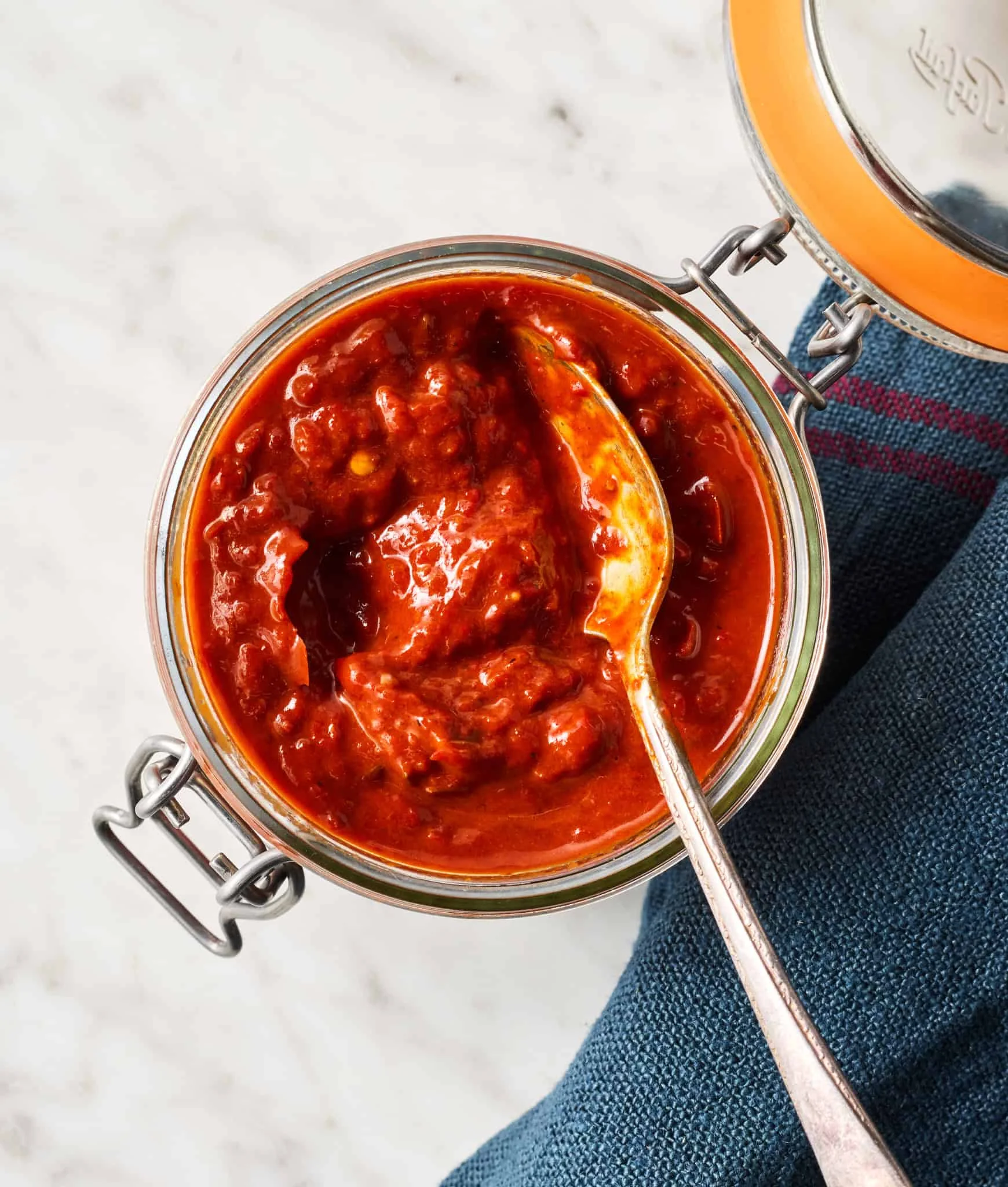
This homemade harissa recipe combines roasted red peppers, spices, and more to create a versatile condiment that enhances various dishes.
Transform Your Cooking with Harissa
Move aside, typical condiments—homemade harissa is the flavorful addition your kitchen needs. This North African chili paste brings together roasted red peppers, dried chiles, a blend of warming spices, garlic, and lemon, resulting in a sweet, smoky, and vibrant condiment with just the right amount of heat. Traditionally originating from Tunisia, harissa has become emblematic of the broader spice culture in North Africa and the Middle East. The cornerstone of many beloved dishes, like couscous and stews, this paste showcases how a few high-quality ingredients can transform a dish from mundane to extraordinary.
Though harissa was once a niche ingredient in Western kitchens, its popularity has surged, spurred by increased interest in global cuisines. That's a trend that many food enthusiasts observe—consumers are now more adventurous, keen to explore flavors that were once considered exotic. Whether you're a professional chef or a home cook, adding harissa to your pantry can unlock a wealth of culinary possibilities, altering the way you think about flavor pairings and technique.
The Ingredients Behind the Flavor
The beauty of harissa lies in its simplicity. The key components—roasted red peppers and dried chiles—not only supply heat but also a texture that enhances dishes in unexpected ways. Roasting brings out the peppers' natural sweetness while the dried chiles contribute depth and complexity. Alongside garlic, spices like cumin and coriander offer warmth, balancing the heat with their earthy tones. The addition of lemon or another acid brightens the mix and brings everything together, making the flavor multidimensional.
For anyone interested in homemade cooking, crafting your own harissa means having control over the ratios of each ingredient. You can fine-tune the spice level according to personal preference. Some people prefer it milder, opting for sweeter peppers or fewer chiles, while others might go for a real punch by increasing the number of heat-packed varieties like serrano or bird's eye pepper. This kind of customization ensures the resulting harissa suits individual tastes, something store-bought options often fail to achieve.
Versatile Usage Ideas
Harissa isn't just for marinating meats; it's perfect for adding a kick to shakshuka, enhancing falafel wraps, or simply brightening up roasted vegetables. I’ve been making my own harissa for years, long before it became a common find in grocery stores. Its rich flavor profile makes it a staple for any culinary explorer.
If you're working in this space, you might resonate with how harissa can transition beyond its traditional uses. Picture this: a simple sauté of green beans tossed with a dollop of harissa, turning a mundane side dish into something remarkable. Or consider that lunchtime sandwich where a smear of harissa could replace mayonnaise, injecting a vibrant burst of flavor instead of bland creaminess. The condiment offers a remarkable versatility to chefs and home cooks alike. Furthermore, it can easily be blended with yogurt for a creamy dip or spread, making harissa a dynamic player in the kitchen.
Cultural and Culinary Significance
Understanding harissa also requires a look at its cultural roots. In Tunisia, it's not merely a condiment but a symbol of comfort and home. Recipes often vary from household to household, creating a thread of personal connection among families. This regional diversity speaks volumes about how such ingredients can be adapted and personalized in different cultural contexts. It's fascinating to consider how today's culinary globalism can impact these local traditions. A jar of harissa might be found in a kitchen in Paris, but its heart remains in North Africa.
As global influences intermingle in our culinary choices, the transition of ingredients like harissa into mainstream cookery reflects a broader trend. Dishes that combine varied heritage often tell complex stories about migration, trade, and adaptation. Some traditional recipes even have multiple versions competed for across regions, lending to the vibrant tapestry of flavors that characterize North African cuisine. This rich exchange fuels creativity in modern cooking and supports the idea that flavors are not static but rather dynamic and evolving.
Health Benefits and Nutritional Profile
It’s easy to overlook the health advantages nestled within the ingredients of harissa. Most components—such as peppers and garlic—are packed with antioxidants and vitamins. Roasted red peppers are known for high levels of vitamin C, while garlic has been celebrated for its potential benefits to heart health. If you incorporate harissa into your meals, you're not just adding a dash of flavor; you could be making your plate healthier as well.
In the quest for vibrant cooking, harissa emerges as an ingredient that doesn’t compromise on health while still delivering mouthwatering results. Those seeking to spice up their meals are often concerned about additives found in processed condiments, so making your own harissa offers a clean, satisfying alternative.
Future Outlook: Harissa in Commercial Settings
This is where the culinary community might need to tread carefully. Authentic recipes carry weight, and as companies experiment with such ingredients, maintaining the essence of what makes them special is vital. What this means for you, the consumer, is that you might face a choice between convenience and authenticity. The challenge will be finding harissa products that maintain true to their vibrant roots while offering the convenience modern lifestyles demand. Meanwhile, home cooks can continue harnessing this ancient condiment to keep their culinary adventures alive and rich.



Discussion
Sign in to join the discussion.